Bad pants and the flow of happiness

Leave a comment
Quotes / Recommendations / Work

Being somebody of strange proportions—tall and wide, but not quite tall enough or wide enough to warrant special treatment—I have never been able to find clothes that feel right. How do people who fit their clothes feel, I wonder. What is it like to just put on a pair of trousers, or a shirt, and be comfortable?

So this quote from David Lynch in GQ hit home.

"I am searching for a good pair of pants. I never found a pair of pants that I just love. I like comfortable pants and clothes I can work in, that I feel comfortable in. I don't really like to get dressed up. I like to wear the same thing every day and feel comfortable. It's a fit, it's a certain kind of feeling, and if they're not right, which they never are, it's a sadness. You know, it interrupts the flow of happiness. I'm working on it, believe me."
(via @seanieviola)

My current uniform, established over the course of the pandemic to serve my expanding frame, and not-yet abandoned: a Carhartt heavyweight T-shirt and a pair of Topo “dirt” pants. No sadness today.

Riding the bike

Leave a comment
audio / Media / Quotes / Work

I loved hearing Annie-B Parson talk about choreography on the Time Sensitive podcast—particularly her work over many years with David Byrne.

Parson has worked on a large number of projects in the past two or three decades, culminating in American Utopia (I saw the show when it was on its original tour, totally fascinating.)

But the most interesting part was that she now came to see all of those works as, ultimately, the same piece.

“So that’s like all one dance as far as I’m concerned because when you’re working with an artist of that caliber, you’re just on this road with them. You know what I mean? Trying to be adjacent to them in a sense. Ride the bike with them.”

It’s a fascinating way to look at the work we do with others, our teams, our collaborators. We’re all riding along, side by side, trying to stay on course for our destination.

(Previously: David Byrne on music formats | Great teams)

Attention economics

Leave a comment
Uncategorized

Jonathan Katz has the best piece I’ve seen about the current attempts to rewrite the history of the New York Times op-ed controversy in 2020. (You remember, the one that engulfed the paper when it published Tom Cotton’s call for federal troops to end Black Lives Matter protests? The one currently undergoing a revisionist reconstruction project which is being laundered by Semafor as a way to get attention?)

• Some people dredged up a mini piece I wrote about Twitter 15 years ago, which wasn’t the first mainstream media coverage, or even the first thing I wrote about it, but I think struck a nerve in retrospect because I called it out for being both “baffling and seemingly pointless” while simultaneously “intriguing, useful and addictive.” The need and the needlessness, all wrapped into one place.

• Absolutely struck by this Anthony Lane piece on the 100th anniversary of The Waste Land. It’s a little much in places, but “a symphony of shocks” connected with me; imagine how alien this work seemed when it arrived—and how inevitable it feels in retrospect.

• More excellence: Studs Terkel interviewing George Nakashima.

• Laurie Anderson, O Superman.

You can’t get it back

Leave a comment
Media

Despite working in Hollywood, an industry that loves to create culture via the medium of checking boxes—screenwriter Charlie Kaufman has made a career out of avoiding those boxes completely. Being John Malkovich; Adaptation; Eternal Sunshine of the Spotless Mind; Synecdoche, New York.

After reading a Twitter thread from Casey Johnston, I went down a Kaufman rabbit hole and found this 2011 speech in which he talks about screenwriting.

But really it’s just about creating, full stop.

Be yourself, he says, even when it’s hard or you don’t understand it. Because, really, nobody will ever understand what drives you to make things. But if you can scratch that itch, that unknowable thing inside of you, perhaps you may be.

One line got me particularly.

“That’s two hours I’ll never get back.”
It’s a favorite thing for an angry person to say about a movie he hates.
But the thing is: every two hours are two hours he’ll never get back. You cannot hoard your two hours.

Radar, week 24: Hustlers and homes

Leave a comment
Link / Things my friends have made / weeknotes / Workbook

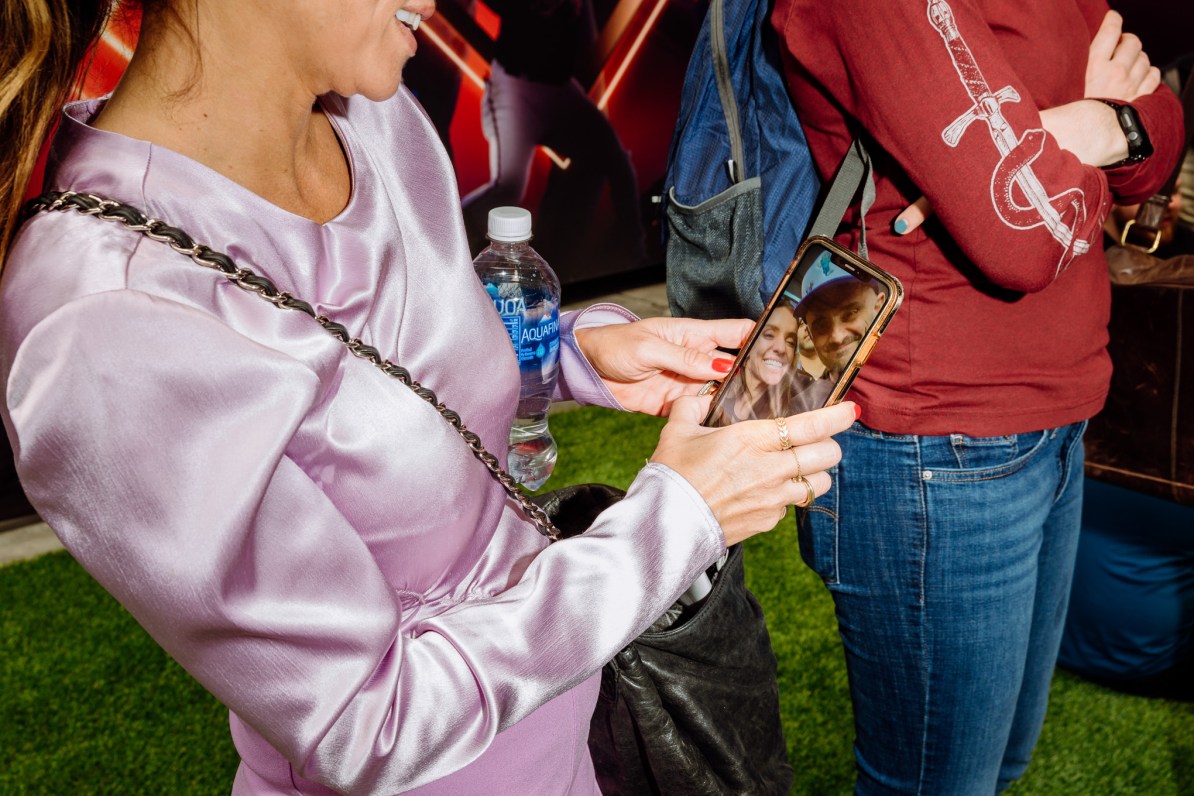
• Loved this Mia Sato report from Gary Vaynerchuck’s VeeCon. Internet-driven fandoms are such fertile (and often terrifying) territory.

The rise of the internet’s creative middle class.

Robots building offshore wind turbines.

• How Houston moved 25,000 people from the streets into homes of their own.

• Megan Tatum on queer campaigners using the net to organize in a conservative Muslim country.

Radar week 18: Re-release

Leave a comment
Link / Things my friends have made

Facing life: Eight people discuss life after incarceration in this beautifully simple, extremely touching project from Pen and Brandon.

• New York Times is killing it with clear interactives at the moment—here’s one about the soundtrack to the AIDS crisis: I was sold as soon as they showed me a bunch of pictures of mixtapes.

How police interfere with public spaces.

• I get the ethical stance of Ogilvy saying it won’t work with influencers who digitally edit or filter their images any more. But it’s always weird for an advertising firm to get on its high horse. Nor does it seem they have a stance on other forms of image manipulation. Makeup? Wigs? Cosmetic surgery?

• Talking of confusing ethics: the monk helping the Vatican take on AI.

Just a formality

comment 1
Workbook

Form follows function: an inspiration for designers and makers of all kinds.

You see it surface in other ways, twisting a little, showing a different face: Separate content and presentation; Radical functionalism; Let people’s needs determine the shape of the thing, not the other way around.

But form follows function is an ideal, not a fact. 

It appeared as a counter to formal constriction, not as a natural law. Because while function is the why, forms do dictate what can go in them. Forms that are given to us determine some of the ways we create, determine the edges, the shape, the possibilities. 

You write your text messages differently to your emails. You sit straighter at a wedding ceremony than you do on your sofa. You make different things with a saw than you do with a hammer.

Or: The pop song is three minutes long. The novel is a book of fiction containing, very roughly, 75,000 words. An American sitcom season is 22 episodes, each running 21 minutes. 

Formal constraints can be constricting, limiting. They can shrink our horizons, turn us all into hammers. 

Form doesn’t emerge from a void. And formats don’t always catch on. 

Sometimes this is technical: the creation is too time-consuming or expensive or complicated to be worth the effort. Sometimes it’s commercial: the Hiway disc, invented in the 1950s at Columbia Records, was smaller than a 45 and could contain as much music as an LP, but was sold as a record you could play in your car, which it turned out nobody wanted. 

Sometimes it’s a little of both: Sony’s Betamax was technically better than JVC’s open standard VHS, but it could only handle an hour or so of video. Greater capacity and higher availability beat higher fidelity, and Betamax lost.

When formats catch on, it’s a push and pull between what already exists and what comes next. The form shapes the function. 

The pop song is three minutes long because the technology of music distribution created limits; only around three and a half minutes of recorded sound could fit on one side of a 45. But if we had only listened to four-hour long operatic epics, would that have worked? Would people have so readily bought singles? 

In his book How Music Works, David Byrne says the technology tessellated with formats that people already knew—short blues songs, for example—and eased their path. Just as VHS tapes could contain movies more easily than its rivals, 45s were more readily adopted because they already fit at least some people’s musical tastes.

Theodore Adorno said that music was debased by the three minute pop song, that our attention spans were being killed by “atomized listening.” It’s true that form preceding function means that our horizons change. 

But formal constraints—like forms themselves—are not impermeable or unchangeable. They shift with time, with taste, with technology.

Movies, no longer constrained by the needs of VHS, are getting longer. Streaming media has largely liberated us from the episode length or season limitations. And when I listen to the music of Billie Eilish or the XX, I hear an intimate experience that seems directly related to the constraints and context of earbuds.

I like discovering the platonic ideal of a particular format, or the bracing feeling of seeing somebody push a familiar concept over new edges.

And yes, don’t let the format get in the way. But also don’t reject the benefits that form can bring. Remember that, just as with all rules, form follows function… except when it doesn’t.
Radar week 13: Niche hobbies

Leave a comment
Link

• This collection of Japanese cassette tapes is quite beautiful.

This drone time lapse photography of a herd of sheep moving around has a wonderful liquid quality to it.

• The dirtbag left (and its heroes) gets an inordinate amount of attention. The latest is Adam Tooze.

• I think the common thread between these “rock and pop greats” who are avid model railway enthusiasts is not that they are musicians, but that they are old dudes.

• Free documentary on Isamu Noguchi’s unfinished atomic bomb cenotaph.