- Susy Thunder was a pioneering phone phreaker
- How does the FBI’s art crime team operate?
- Janet Kessler has been tracking San Francisco’s coyotes for 15 years.
- Dominic Cummings has a £10 per month Substack newsletter. It shows a “voracious intellect” “coupled with a tireless curiosity” with writing that is simultaneously “too long, too aggressive, too inward-looking.”
- The Guernica tapestry is back at the United Nations
- Roxane Gay pulled her podcast from Spotify: “Sometimes, racism is sprinkled in [Rogan’s] conversations, just to keep things interesting.”
- Should we care about the design of at-home covid tests?
- Not sure whether I’m looking forward to the TV adaptation of Pachinko or not.
Loss and survivance
You can lose a lot of things. Your door keys. Your temper. The plot.
If you’re particularly careless, you might even lose entire countries.
Ukraine is on the edge right now. It’s not the first.
Doggerland was a piece of prehistory, a stretch of marshy coastline from when Britain was just an archipelago dangling from one corner of Europe. It was misplaced during the Original Brexit 9,000 years ago when the sea carved East Anglia away from the Netherlands.
It was only rediscovered in the 1930s.
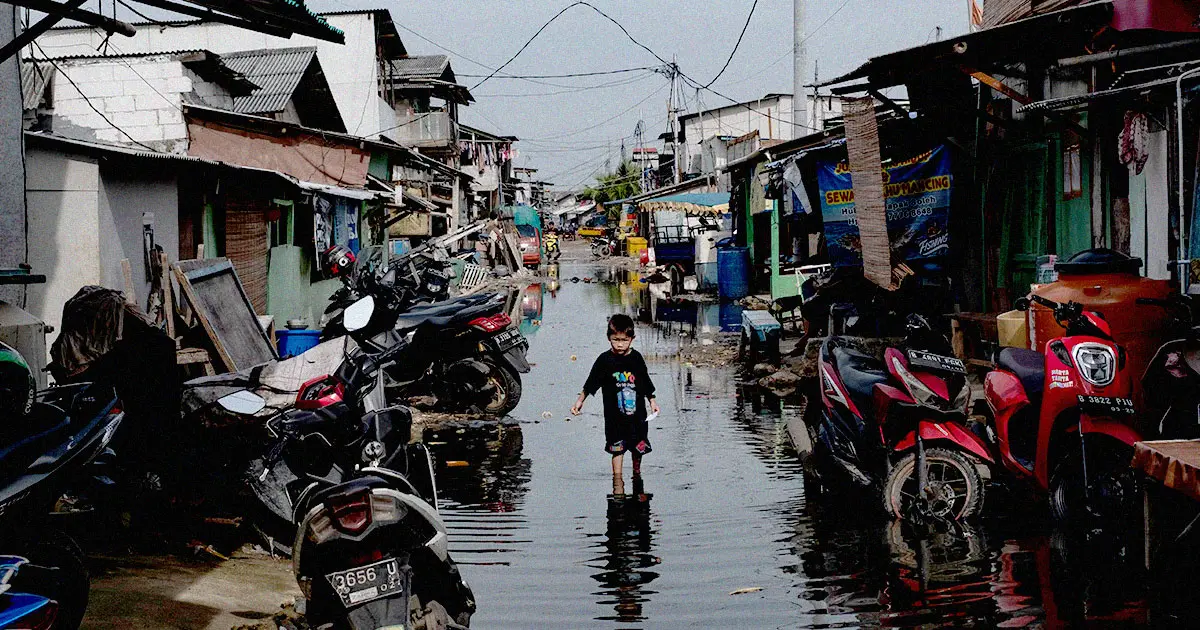
Today, Jakarta is sinking into the ocean. Rather than lose a capital city, Indonesia’s just moving it somewhere else.
You lose things as you grow older. People, places, memories. Some of them you can control, come back from. Some you can’t.
Sometimes people disappear. Or they can be disappeared. Sometimes they’re gone, even if they’re not even really lost.
Roy Scranton wrote about what loss can teach us. When the Europeans slaughtered their way across the Americas, he says, “truly, a world ended. Many worlds, in fact. Each civilization, each tribe, lived within its own sense of reality—yet all these peoples saw their lifeworlds destroyed.”
I think about those lines, those lifeworlds, a lot.
Loss.
David Marchese asked Eddie Vedder about loss: he turned the story around.
Scranton introduced me to a new term to describe what happens when you lose it all.
You fight back by commiting an act of survivance.
That’s what Gerald Vizenor, the Anishinaabe poet, calls it.
Derrida wrote about survivance too. He called it something between life and death, the continuous reanimation of a living-dead being.
Indonesia is survivance. Turning the story around is survivance. The people of Doggerland were survivance, too.
Maybe we might all have to be it one day.
Radar: Week 5
• Beautiful images of polar bears who have moved into an abandoned Arctic weather station (drone footage on YouTube)
• Coober Pedy is a town in Australia where half of people live underground because it’s so bloody hot.
• The alien’s binary: Atossa Araxia Abrahamian on motherhood.
• Pew’s morphology of Republicans identifies five distinct groups.
• Mind expanding (to me) piece on the possibilities of Arabic typography.
The publisher’s dilemma
The great gear shift in digital music—the one that took us from Napster piracy, through iTunes, to the enormous, on-demand library of Spotify—took little more than a decade.
We all live in Lester Bangs’ basement now.

I’d just moved to the US when Spotify appeared, almost out of nowhere. It felt different, looked different. What was this European revelation? Music online was a hard market, and streaming was even harder, in part because the labels like it that way. But Spotify outflanked its rivals, sometimes in good ways. It also bullied artists. It was part of a class that arrived with a pile of investment cash to burn as it elbowed its way into a market and then, on top of the mountain, installed itself as a new middleman.
Now it’s like an old glove. It doesn’t really fit me any more, but it’s comfortable and I know it. But it’s worn away in all the places that feel familiar.
Today, Spotify’s under a different kind of pressure. A kind that won’t just go away.
The change came when the platform dipped into publishing. It branched out into podcasting. It started rolling up the industry as much as possible. It paid Joe Rogan $100m to capture his audience, since when he has made googoo eyes at all kinds of rightwing ideology, brought in guests who issue misleading claims about covid, and promoted ivermectin. Disinformation expert Renee Diresta went on Rogan’s show: she says the audience hated her.
So Neil Young started a new sort of pushback: Spotify is free to do what it wants, but artists aren’t obliged to help it make money. You don’t have to be a platform for everything, and you don’t have to be on every platform.
Everyone has their opinions. Daniel Ek has guidelines.
Me? I stopped giving it my money. There are better options.
Further reading
• “Two thirds of publishing is about failure”
• Don’t try to be a publisher and a platform at the same time
• Lester Bangs from the trailer for Creem: America’s Only Rock n Roll Magazine
Tree aesthetics

There are so many trees, and not enough. We need a billion trees, a trillion. But even a single tree can tell a beautiful story.
There are four hundred trees stacked in a vertical forest in Hubei Province.
Heatherwick Studio’s 1000 Trees housing complex in Shanghai is two years behind schedule but it’s here.
Tree aesthetics are here, too: We’ll see them more and more. Trees are our friends, our saviors. Hope in a time of climate change.
They call 1000 Trees “verdant and striking.” I’m not sure this is what verdant feels like. But when other megacities strip their poor neighborhoods of shade trees, just one can be a lifeline.

The thing I remember about Shanghai is the hot, dirty smell; a crackling, sweaty garbage scent of people and possibilities that shook me up and took me over. Some parts of the city were verdant to me: the avenues of the French Concession were green and dotted with shade. But thatt was ten years ago, twelve years ago. A lot can change.
Trees are a kind of equity: you can find out your city’s score. There are more people than trees in San Francisco these days, but the coverage isn’t even.
You’re guilty of using too much carbon, but at least you can offset it by buying a tree. That’s why we need so many. Be careful, though: forest offsets aren’t always what they’re supposed to be.
At dusk one day, when it was warm and sticky, I took a few minutes to count the trees on our property. There were twenty three. Some of them are tall and proud, some of them only just getting started. Twenty three. Suddenly one thousand doesn’t seem like much, and a trillion doesn’t seem anywhere near enough.
Further reading:
• It’s not climate change, it’s everything change
• The Falkland Islands have no native trees.
• An argument that science have a court system like the law.
• What can a technologist do about climate change?
Longform and function
Longform is saying goodbye. Or at least the reading service, which has listed thousands of great articles over the last decade, is coming to an end. (The podcast continues.)
The site came up a lot when we were starting Matter, as a kind of guiding light for a journalism renaissance that started in the 2010s. Folks were challenging the notion that writing on the web had to be short and informational, pushing back on the prevailing idea that depth was something that just couldn’t fly. And Longform was a huge part of that. While it wasn’t just highlighting web-only stories, it was proof that people were doing good work online that had substance and feeling, not just interchangeable pieces of data.
We were lucky enough to have our stories appear in Longform’s end of year lists on multiple occasions, including everything from Virginia Hughes on 23 and Me to Josh Dean on the internet’s insatiable desire for crime, or from Matthieu Aikins reporting from Syria or Taffy Brodesser-Akner writing about Britney.
But it was inspiration and discovery that made me love Longform the most. It rekindled my love of some publications, exposed me to others, and… well, it helped sift the New York Times Magazine, New Yorker, and other stalwarts for the stories really worth investing time in.
Three random stories that I found there and meant something: Michelle Dean’s Buzzfeed story on Munchausen’s by proxy; Willy Staley’s CalSunday profile of Thrasher’s Jake Phelps; Anna Wiener’s breakthrough N+1 piece on Silicon Valley.
Keeping those recommendations going is hard work. (I stopped my personal attempt, If You Only, a few years back because even filtering for a single daily read was too much: the Twitter account has since lapsed.) And curating for 10 years is a feat of dedication.
Not everything lasts forever, and it’s worth celebrating those things that end gracefully. So here’s to everyone who worked on Longform, featured in it, or otherwise benefited from it. That was a good run.
Further reading:
• Nieman Lab: Longform will no longer recommend nonfiction articles around the web. Readers are bummed (2022)
• The return of If You Only (2015)
• Snowfallen (2013)
My ears thank you
I bloody love podcasts.
I mean, I get that this is not a unique or particularly brave position to take. We’re surrounded by the things, everyone probably has their favorites, or they have one of their own. (Everybody* Has a Podcast now in the same way that Everybody* Had a Blog 15-20 years ago.) The Golden Age might be over, the market flooded with terribly-produced, inconsistent audio and formless blobs that are merely placeholders to wrap around advertisements for mattresses or smart toothbrushes or underwear. But even if it is gone, it brought us a lot along the way—from gigantic, sweeping stories to intimate whispers. And I love them for it.
I love that plucky podcasts like 99% Invisible have forged their own niches, created their own spaces and gangs (even if I just discovered 99PI is now actually part of Sirius XM.) I love that a creator like Helen Zaltzman can actually build a living—albeit probably a complicated and not that glamorous one—out of telling the world about the things she loves in podcasts like The Allusionist. (It’s words. She loves words.)
And I love that they’ve gotten me through.
At the start of the pandemic, with no commute and no alone time—in fact no discernible transition time at all—I stopped listening to podcasts almost entirely. I couldn’t do anything to justify the time, really. Music was a refuge, radio a place I could let burble in the background… but the kind of spoken word audio that required concentration just couldn’t work for me.
Then, two things happened—or, I suppose, two podcasts happened. There was the Guardian’s Football Weekly which was one of the originals that we set up back in the day and is still going strong, even if the cast has changed somewhat. Science Weekly is pretty different now, and Tech Weekly bit the dust five years ago. But Football Weekly still carries on, and during the sharpest corners of the pandemic it became a mooring to the life I recognized.
Second, and more novel to me, was Philosophize This! by Stephen West. Anna switched me on to it: You’ll love this, she said, a guy nerding out about ideas. And she was right. Like Zaltzman, this is just a person who’s passionate about what they want to share—but it was like the philosophy primer I always wanted. I’m 130 episodes deep now, and even if the subject matter is more complex as time goes on (because, well, continental philosophy) he never leaves you behind.

Episode #189 … Everything that connects us is slowly disappearing. – Byung Chul Han pt. 2 – Philosophize This!
Today we talk about the disappearance of rituals, truth, community, communication, public spaces and talk about the importance sometimes of being an idiot. Hope you love it! 🙂 Sponsor: Better Help https://www.BetterHelp.com/PHILTHIS Get more: Website: https://www.philosophizethis.org/ Patreon: https://www.patreon.com/philosophizethis Philosophize This! Clips: https://www.youtube.com/@philosophizethisclips Be social: Twitter: https://twitter.com/iamstephenwest Instagram: https://www.instagram.com/philosophizethispodcast TikTok: https://www.tiktok.com/@philosophizethispodcast Facebook: https://www.facebook.com/philosophizethisshow Thank you for making the show possible. 🙂
- Episode #189 … Everything that connects us is slowly disappearing. – Byung Chul Han pt. 2
- Episode #188 … Achievement Society and the rise of narcissism, depression and anxiety – Byung-Chul Han
- Episode #187 … How much freedom would you trade for security? (Foucault, Hobbes, Mill, Agamben)
- Episode #186 … Are we heading for a digital prison? – Panopticon (Foucault, Bentham, Cave)
- Episode #185 … Should we prepare for an AI revolution?
I don’t think it’s a coincidence that the podcasts I like most have been going for a long time: Football Weekly since 2006, 99PI since 2010. Philosophize This! has been going since 2013, and while The Allusionist is a mere six years old, Helen Zaltzman has been doing her other podcast, Answer Me This!, since 2007 (although it recently ended.) There’s something about exploring your format, and delivering it perfectly that I just… well, love.
I just wanted to say thank you, really.
Explaining the simple things well
This WSJ video on how TikTok’s algorithm works is proof that just really explaining something that’s pretty obvious can be pretty engaging.
Ultimately, I’m not sure there’s a great deal new to what they found—a lot of bots, and a little bit of interpretation, to determine that a lot of TikTok’s algorithmic decisions are based on what you watch, which seems obvious. (I basically never like anything on TikTok and follow almost no accounts: my FYP is pretty clearly based on giving me more of the things I spend most time on.)
But stating the obvious with data is important and can be really enticing.
Now, I’m sure there are methodological arguments happening on Twitter about how they went about that, and I have my own suspicions that the techniques used only tells us a certain slice of self-reinforcing things. That is: it’s not the way content is publicly tagged that makes the algorithm feel like secret sauce, it’s the invisible connections that make the difference.
But still, a great example of taking a thing that people want to know about and showing them the bones.
Slowdown

I started tracking my book reading habits a few years ago as a way of remembering what I’ve been consuming. Extra benefit: It’s also helped me see patterns or trends. The trouble is that I can also now look back and see when I’m losing the plot.
Here’s what I mean: Last year my reading pace felt like it had fallen off a cliff—there were three months or so of total freeze during the pandemic. But honestly, this year has been worse. Looking back at my list, I can see that I read very few books from February to about June, a nearly six month hiatus.
One trick I have found is that I have at least three different books on the go at any point: something in print to keep with me during the day, something on my Kindle for bedtime reading, and an audio book for listening to in the car (and yes, they count.) Having something for every mode means that I can turn away from the fun game of staring at my phone or endlessly switching between three radio stations to avoid the ads.
Anyway, the list—which only includes things I’ve actually read closely, rather than sped through for work—says I’ve read 13 books properly so far in 2021, whereas I was at 19 books at this point in 2020 and 30 the year before that. I don’t know what it says, really, if anything. But still.
Nuanced history
If you want to generate a reaction among nearly any British person—actually, from nearly anyone who comes from a former British colony (and by that I suppose I mean about a quarter of the planet) then all you need to do is start talking about the complicated history and legacy of the Empire. And if you want to really crank your blow-the-gasket-o-meter up, then get onto the subject of museums and statues and things that might have made their way into British hands by possibly foul means. It’s going to generate a reaction.
No matter how somebody tries to boil it down to good/bad, the reality is that it’s… history. We can’t change the actions of the past, only view them and consider what it means. It’s complicated, and I bloody love it.
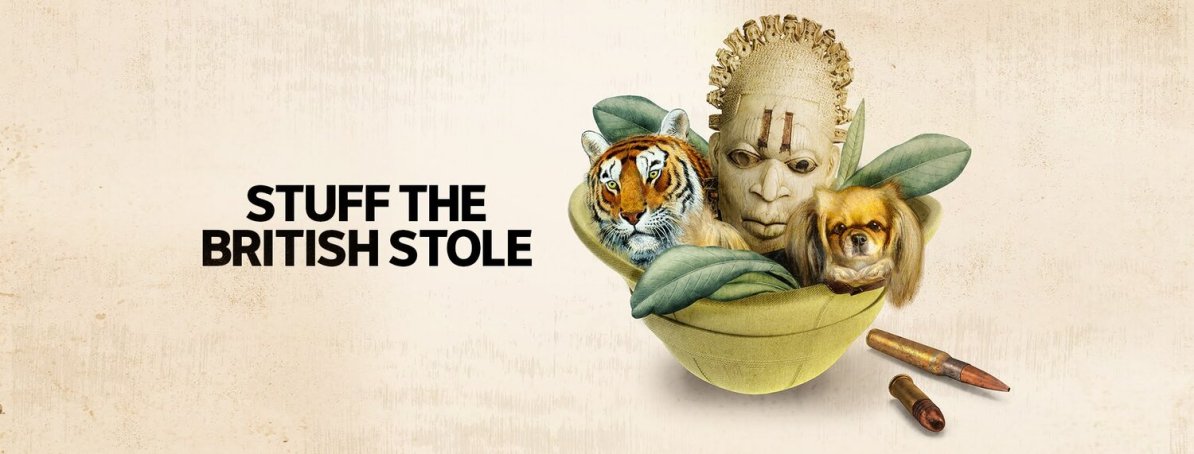
I’ve just binged the entire first season of ABC’s Stuff The British Stole—a recommendation that came from 99% Invisible. It manages to tell these stories and ask these questions in a nuanced, honest, complete way and remain totally engaging all the while.
Highly recommend it.

