Slowdown

Leave a comment
Media

I started tracking my book reading habits a few years ago as a way of remembering what I’ve been consuming. Extra benefit: It’s also helped me see patterns or trends. The trouble is that I can also now look back and see when I’m losing the plot.

Here’s what I mean: Last year my reading pace felt like it had fallen off a cliff—there were three months or so of total freeze during the pandemic. But honestly, this year has been worse. Looking back at my list, I can see that I read very few books from February to about June, a nearly six month hiatus.

One trick I have found is that I have at least three different books on the go at any point: something in print to keep with me during the day, something on my Kindle for bedtime reading, and an audio book for listening to in the car (and yes, they count.) Having something for every mode means that I can turn away from the fun game of staring at my phone or endlessly switching between three radio stations to avoid the ads.

Anyway, the list—which only includes things I’ve actually read closely, rather than sped through for work—says I’ve read 13 books properly so far in 2021, whereas I was at 19 books at this point in 2020 and 30 the year before that. I don’t know what it says, really, if anything. But still.

Nuanced history

Leave a comment
Media

If you want to generate a reaction among nearly any British person—actually, from nearly anyone who comes from a former British colony (and by that I suppose I mean about a quarter of the planet) then all you need to do is start talking about the complicated history and legacy of the Empire. And if you want to really crank your blow-the-gasket-o-meter up, then get onto the subject of museums and statues and things that might have made their way into British hands by possibly foul means. It’s going to generate a reaction.

No matter how somebody tries to boil it down to good/bad, the reality is that it’s… history. We can’t change the actions of the past, only view them and consider what it means. It’s complicated, and I bloody love it.

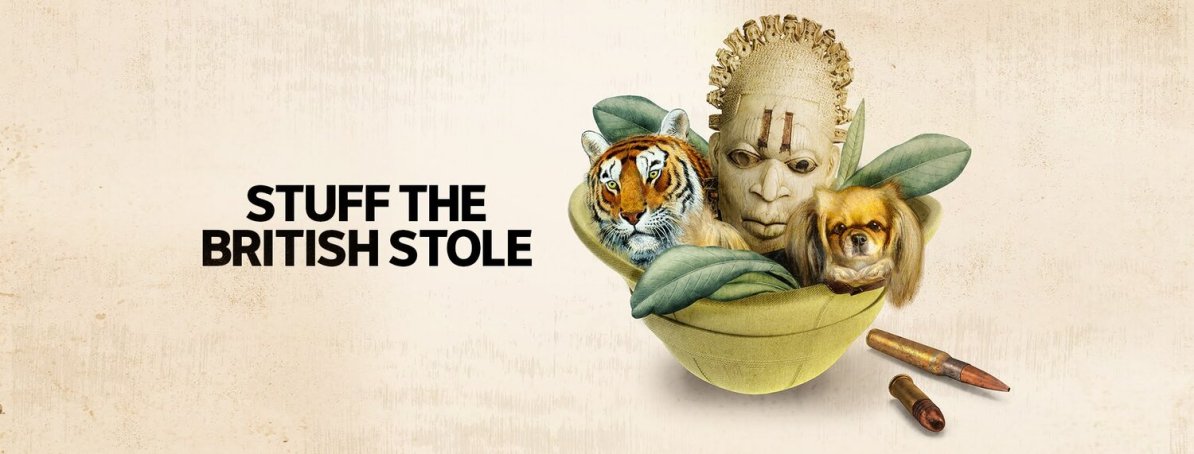
I’ve just binged the entire first season of ABC’s Stuff The British Stole—a recommendation that came from 99% Invisible. It manages to tell these stories and ask these questions in a nuanced, honest, complete way and remain totally engaging all the while.

Highly recommend it.

How should we feel about that?

Leave a comment
Media

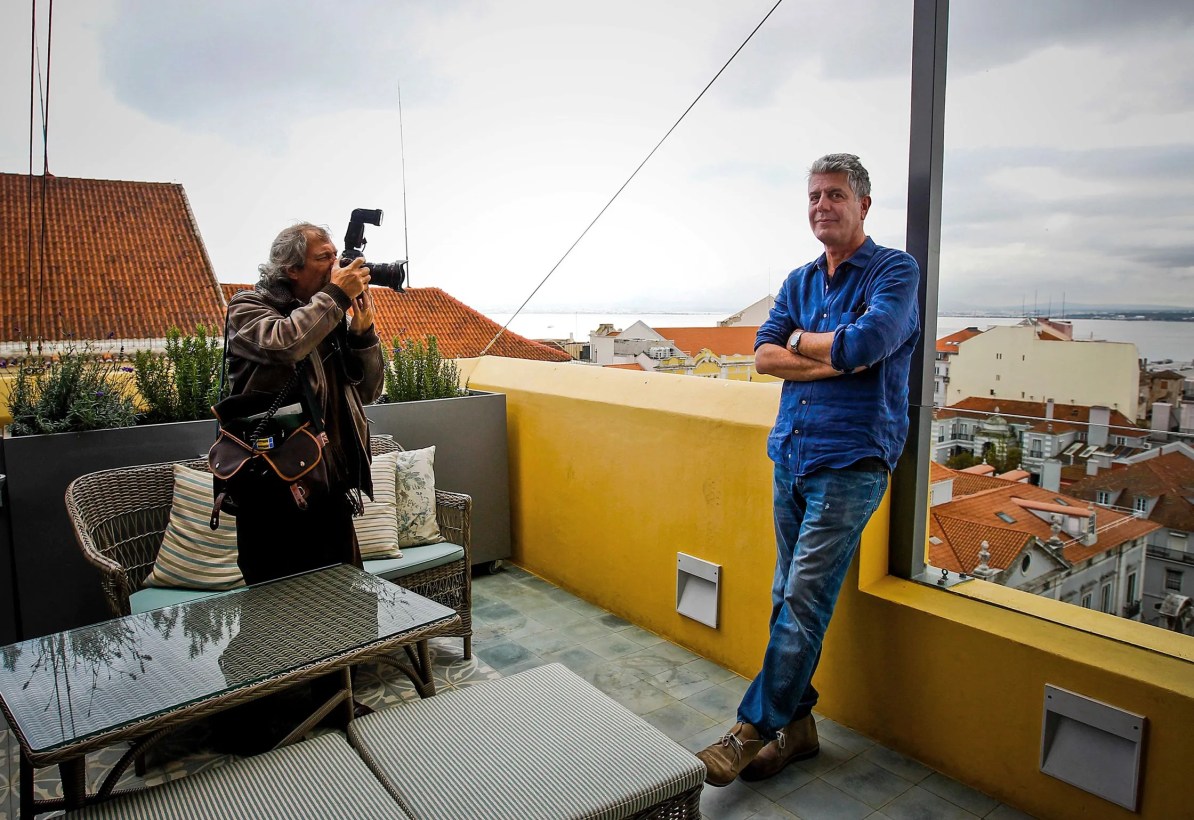
Eyeballs on the clash of the real and the virtual this week with the news that a new Bourdain documentary features an AI-generated version of the man’s voice reading out emails he sent people (notably, I think, the audio appears to have been used in the trailer.) This NYer piece, featuring my colleague Karen Hao in quotable form, goes through some of the issues.

Creating a synthetic Bourdain voice-over seemed to me far less crass than, say, a C.G.I. Fred Astaire put to work selling vacuum cleaners in a Dirt Devil commercial, or a holographic Tupac Shakur performing alongside Snoop Dogg at Coachella, and far more trivial than the intentional blending of fiction and nonfiction in, for instance, Errol Morris’s “Thin Blue Line.”

[…]

At the same time, “deepfakes” and other computer-generated synthetic media have certain troubling connotations—political machinations, fake news, lies wearing the HD-rendered face of truth—and it is natural for viewers, and filmmakers, to question the boundaries of its responsible use. Neville’s offhand comment, in his interview with me, that “we can have a documentary-ethics panel about it later,” did not help assure people that he took these matters seriously.

Helen Rosner, The ethics of a deepfake Anthony Bourdain voice, The New Yorker

Which books do you truly love?

Leave a comment
Media

“I believe that the books and stories we fall in love with make us who we are, or, not to claim too much, the beloved tale becomes a part of the way in which we understand things and make judgments and choices in our daily lives. A book may cease to speak to us as we grow older, and our feeling for it will fade. Or we may suddenly, as our lives shape and hopefully increase our understanding, be able to appreciate a book we dismissed earlier; we may suddenly be able to hear its music, to be enraptured by its song.”

Salman Rushdie, Ask Yourself Which Books You Truly Love, New York Times

Getting inside somebody’s head

Leave a comment
Media

There’s something so intricate and mysterious about the whys of another person, wanting to understand what makes them tick, what made them what they are. It’s an instinct that’s so human. Biographies, documentaries, magazine profiles, obituaries are all part of this drive we have to get inside somebody else’s head.

One of my first jobs, as a researcher for the Royal Shakespeare Company, was to build dossiers on interesting and notable people that might make good patrons or ambassadors. It was somewhat uncomfortable (I once did a dossier on one of my college lecturers) but it was also endlessly interesting, trying to pin down the connections and actions and motivations that we could learn from.

That’s one reason I was fascinated by the launch last year of The Profile, a newsletter/media product focused entirely on the format of profiles about interesting people. Former Fortune journalist Polina Marinova wrote about what it’s like to launch a company during the pandemic, but I think this idea of disaggregating formats is incredibly intriguing. More than a year in, I’m interested to see where it is going to go.

The question behind all profiles and biographies, I suppose, is why do you want to know about this other person? Why do you need to know about them? What can you learn?

(Side note: The paranoid journalist in me is also fully terrified of profiles and biographies. What if you do all that work, if you talk to the people, and review the documents, and you still manage to miss the Thing? What if you write the Harvey Weinstein profile and miss the abuse? A few times in my career this moment feels like it has come close, but I think the answer is that you do everything you can to avoid a mistakes—but sometimes, yes, you will miss the thing, because if people hide themselves from those who are closest to them, you might not be able to see through it either.)

My subscription addiction

Leave a comment
Media

I consume a lot of media. I also pay for a lot of it.

When I started out in journalism, there was a massive shift taking place, driven by the web, towards free access. But it wasn’t just the web. During college I worked evenings as an intern at the newly-launched Metro; I then worked on free-to-access online news at the London Evening Standard and came up through The Guardian, which has long been an opponent of paywalls. Partly because of this, I used to be pretty strongly against paywalls on principle, but I’m certainly not a fundamentalist. Matter was a lean subscription play at first, although it shifted as ownership changed; Anxy was an expensive print-first product; Technology Review has a metered paywall.

Over the years I’ve built up a significant list of subscriptions to many publications and services and a few individuals. It’s now at least 50, probably significantly more: I started out making a full list of all my subs, but it was long and boring. And I’m pretty sure I missed a few off there, particularly small indy magazines.

These range from the pretty mainstream stuff like The New York Times and The Atlantic (neither of which need me as a subscriber, and have corners of problematic output) to the mid-range (I love my London Review of Books) to the small press and esoteric services: The Nib‘s wonderful comics; Sonia Weiser’s regular lists of freelance journalism opportunities.

I wanted to highlight a few that I would recommend that may be new to you.

The Browser I love this curated email roundup of great stories, and have been a subscriber for a few years now. I don’t read it every day, but I always find something worthwhile in there. Interestingly one of the few email newsletters that moved away from Substack, rather than towards it.

Logic One of my favorite subscribes of the past few years, this actually does come out of the Bay Area. It’s three years in or so, and I honestly have absolutely no idea how it’s doing, but it’s always thought-provoking and has a point of view.

Stack This has been absolutely one of the most rewarding subscriptions I have: a monthly surprise delivery of an independent magazine. They were very kind to Anxy in its earliest days, but each edition never fails to delight.

Getting yourself out of the way

Leave a comment
Media

I really enjoyed hearing the director and writer Adam McKay—who has made not-fiction movies like The Big Short, Vice, and a forthcoming Theranos movie, as well as entirely fictional comedies such as Anchormandiscussing creative process on the Longform podcast. It was a little exhilarating to hear him discuss the complexity of producing work in this moment, the feeling that happens when inspiration hits you, and his belief that there are a million ways to tell a story (and that the right way now might not be the same as the right way in a few years.)

One critical lesson, I think, was that when you make something great, it’s partly from you, but it’s bigger than that—it takes on a life of its own, and your job is often to just get yourself out of its way. Which captures, I think, why any of us make anything.

“Sometimes you do a project and then you look back and you’re like, Ah, shit. I let some of myself get in the way of that. It sucks, but it’s also a part of it. And there are so many times where you’re excited that the story did take off, the wind did catch the sail and it went off on its own. And that just feels so good that it far outweighs the times when you make a mistake, or let something go wrong, or too long, or hit the wrong tone. Which is going to happen. There’s no way around it. But those times when it all just catches perfectly—it’s just so exciting that you keep doing it.”

Revolutionary music

Leave a comment
Media

It’s become a kind of folksy, cheesey number over the years, but did you know that the Cat Stevens (AKA Yusuf) song “Father and Son” is actually about the Russian Revolution?

I was a little bit amazed to hear in a recent episode of Song Exploder how the song had started its life as part of a musical about the overthrow of the Tsar in 1917. It’s intended to be a conversation between a young man who wants to go and fight for the revolution, and his peasant feather who wants to stick with what he has worked for.

This isn’t a secret or anything. Here he is talking to GQ last year:

I was living in the West End and musicals were a big thing in my life. I got together with Nigel Hawthorne and we started writing this musical called Revolussia. Essentially, it was about Nicholas and Alexander, the last tsars of Russia, and against that there’s another story about this family in the farmland, in the country. And the father, of course, basically wants to keep things as they are, while the son is really inspired by the revolution. He wants to join. And so that’s the inspiration for that song. That’s why I’m able to represent both sides – though I feel that my preference, my emphasis, was on the son’s side, and the father’s arguments were not quite as strong as the son’s, which is interesting. Change is basically the theme of the song.

It obviously don’t change the universal nature of the song, but it did change it for me—suddenly music that had felt as warm and familiar as an old coat gained this new and surprising context.

(Also highly recommend the Netflix series if you haven’t already seen it.)