Week 32, 2020

Leave a comment
weeknotes

A WEEK OF SMALL VICTORIES, none of which I can really talk about yet—but some projects pushed forward and some assignments came together that I’m excited about. There were some frustrations, too, mainly about trusting my instincts. On a personal front, things have gone very quiet: we’re holding it together, just about, but the summers in San Francisco are the greyest time of the year. In the meantime, reading list ticked up another two. Finished up Didion’s The Year of Magical Thinking: tragic, remarkable, painful. Then for dessert I whizzed through a rather disappointing set of Edmund Crispin (Fen Country) —all intellectual whizz and no guts.

Stories I worked on: Busy week editing the space beat as well as the usual. Developments in quantum-proof cryptographyfooling face recognition using some gnarly deep learning techniques; a guide to TikTok’s clones/competitorsSpaceXspace junk; a look at qualified digital contact tracing successes from Germany and Ireland.

Arundhati Roy on the pandemic

Leave a comment
Workbook

Only just found this extremely salient piece from April:

Historically, pandemics have forced humans to break with the past and imagine their world anew. This one is no different. It is a portal, a gateway between one world and the next. We can choose to walk through it, dragging the carcasses of our prejudice and hatred, our avarice, our data banks and dead ideas, our dead rivers and smoky skies behind us. Or we can walk through lightly, with little luggage, ready to imagine another world. And ready to fight for it.

Gary Younge on Europe vs America

Leave a comment
Workbook

I’ve never read anything better, more lucid, on the difference between racism in America and Europe than this Gary Younge essay in the New York Review of Books. He’s particularly sharp on the reasons that the troubles of Black Americans get much more attention in Europe than the troubles of Black Europeans.

So much is quotable, but here are a couple of lines that hit.

From the vantage point of Europe, which both resents and covets American power, and is in no position to do anything about it, African-Americans represent to many a redemptive force: the living proof that the US is not all it claims to be and that it could be so much greater than it is.

Though Europe has a proven talent for antiracist solidarity with Black America, one that has once again come to the fore with the uprisings in the US, it also has a history of exporting racism around the world. Tocqueville was right to point out that “no African came in freedom to the shores of the New World,” but he neglected to make clear that it was primarily the Old World that brought those Africans there. Europe has every bit as vile a history of racism as the Americas—indeed, the histories are entwined. The most pertinent difference between Europe and the US in this regard is simply that Europe practiced its most egregious forms of antiblack racism—slavery, colonialism, segregation—outside its borders. The US internalized those things.

In a world where black writers and thinkers are being called on to push society forward, I think Gary is an undervalued leader. I was always in awe at the Guardian when he would be in the office or debating the issues of the day at morning conference.

Ancient bum wiping

Leave a comment
Link / Workbook

“The Romans had two primary ways to clean themselves post-bathroom break. Option one? A tool called a tersorium, which was “used to clean the buttocks after defecation.” Imagine a loofah, but made of fresh sea sponge, attached to a wooden rod—similar to back-washers sold in drugstores today. After using the stick to aim and the sponge to wipe, the person would dunk the sponge in a bucket full of water or vinegar to clean it off for the next user.

“But what if you were too poor to afford a tersorium, lived in a place where they weren’t available, or didn’t happen to have one at hand when the need arose? In that case, you’d turn to one of the most readily available—and free—commodities in the world: discarded pottery.”

This is how they wiped themselves in ancient Rome, JSTOR Daily

Week 31, 2020

Leave a comment
weeknotes

THIS LAST MONTH feels like things have been closing in. The limits haven’t changed, just my ambition to challenge them. Not leaving the house isn’t a temporary situation any more; it’s now the normal state—things could be happening a block or two away without me ever realizing. (In fact, they are happening without me realizing: I hit up the local news websites to discover that a new bar is opening on Haight, just a stone’s throw away, or that existing restaurants and bars are back, or that there was a significant encampment of people living in tents on our old block, just a few streets away. Meanwhile, the cafe one and a half blocks away has changed hands and is about to reopen, and I knew nothing of it.)

Documenting the weeks gets a little harder because of this and the fact that now that I’m trying to limit my time on screens outside of work. It’s not necessarily compatible with blogging more, but something’s got to give and that is it.

Anyway, I managed to read another Maigret (four books down now, 71 to go) and made my way through four of my son’s Star Wars graphic novels. How do you count graphic novels towards the total?

Stories I worked on: This podcast episode about Canada’s tech industry • EU sanctions on Russian, Chinese, and North Korean hackers • New developments in quantum cryptography.

Week 30, 2020

Leave a comment
weeknotes

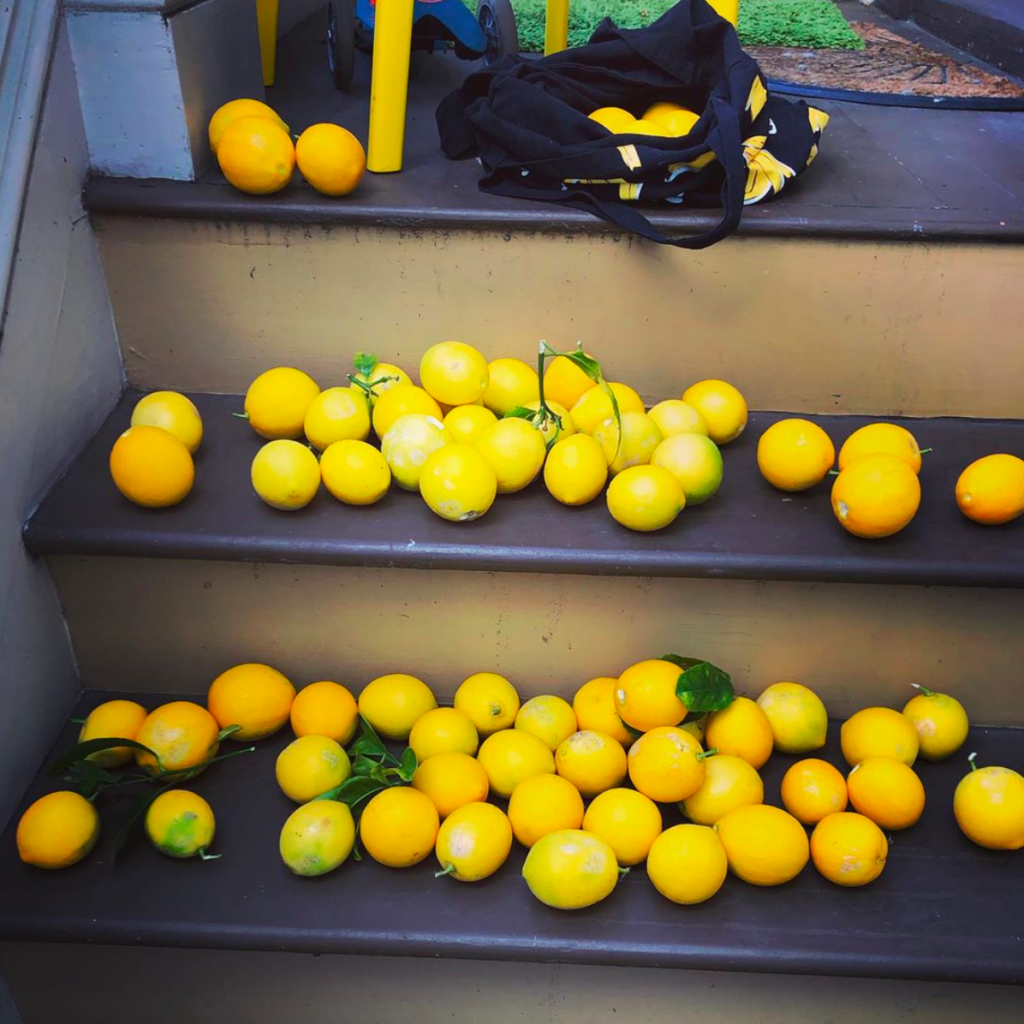
GROWING THINGS HAS NEVER been my forte. I’m great at starting out, and get very excited about beginnings. I can even handle endings pretty well, although that’s more from experience than desire. But I am somewhat less good at maintenance—the fuzzy middle of projects and ideas. But this weekend, as I picked my way through our lemon tree and grabbed another haul (our third or fourth this year) I realized that maybe I was looking at it wrong. The middle is just where beginnings and endings meet, over and over and over. And you get to keep harvesting all the time.

I’m still attempting to catch up on my reading pace after it was almost demolished by the pandemic. Enjoyed Abi Daré’s The Girl With The Louding Voice (which broke through after winning a competition for the best unpublished manuscript, and I can imagine why.) Closely read (or re-read) Ruha Benjamin’s Race After Technology, and I’m just about to finish, on my son’s insistence, Natboff! One Million Years of Stupidity. We’ve really enjoyed the whole Mr Gum series, and I am envious of the freedom and stupidity of Andy Stanton’s writing for kids.

§

My stories this week: Coming back from vacation straight into magazine-issue-closing territory meant limited public output. Both of the stories I put out revolved around conspiracy theories, which seem to be rising in importance as the election draws nearer: Abby Ohlheiser on whether it’s too late to stop QAnon, and if not what it would take; and Joan Donovan on the conspiracy-driving nature of social media.

Going to keep it short this week.

Panel: Tackling The Oft-Dreaded Negotiation

Leave a comment
Work

This guy and his enormous hair took part in a session put together by The Writer’s Co-op (listen to their podcast!) and Study Hall (join their community!) to discuss negotiation—one of the most terrifying things there is in the world of freelancing.

I know the concept carries a lot of anxiety and baggage for people, but my experience—as a freelance writer, an editor, publisher and business owner—I find the mystique around negotiating a little odd. Yes, there are conversations about what work is worth, tweaks happen, sometimes things don’t work out. It’s just how businesses work. And it’s a lot more ordinary than people think.

(Or, to put it another way: contract negotiation isn’t a battle or even a game to me, it’s the moment that sets the table for the real work that you want to happen—the work that you do get enjoyment and satisfaction from. And if you begin a project by going to war with each other, I suspect the collaboration is going to be less successful. I realize not everybody feels this way.)

The other participants (Jenni Gritters, Wudan Yan, Kyle Chayka, Evan Kleekamp and Sarah Gilman) were more lucid and practical than me, I think, but I was glad to be part of it.

The takeaways I thought were most important:
—The best way to get things you want is to ask for them.
—There are many things other than your rate that can be negotiated.
—Decide what things are important to you and be prepared to walk away if you can’t get them.
—Talk to each other! Preferably on the phone!

On reflection I am, I suppose, a very lenient editor who has been lucky to not work (or not build) places that use contracts as weapons. I see my job as trying to get the best material in front of readers while channeling as much money as possible to writers; I don’t mind “stupid” questions; I bear few grudges. If that changes, it’s probably time to stop.

Here’s the recording.