Week 31, 2020

Leave a comment
weeknotes

THIS LAST MONTH feels like things have been closing in. The limits haven’t changed, just my ambition to challenge them. Not leaving the house isn’t a temporary situation any more; it’s now the normal state—things could be happening a block or two away without me ever realizing. (In fact, they are happening without me realizing: I hit up the local news websites to discover that a new bar is opening on Haight, just a stone’s throw away, or that existing restaurants and bars are back, or that there was a significant encampment of people living in tents on our old block, just a few streets away. Meanwhile, the cafe one and a half blocks away has changed hands and is about to reopen, and I knew nothing of it.)

Documenting the weeks gets a little harder because of this and the fact that now that I’m trying to limit my time on screens outside of work. It’s not necessarily compatible with blogging more, but something’s got to give and that is it.

Anyway, I managed to read another Maigret (four books down now, 71 to go) and made my way through four of my son’s Star Wars graphic novels. How do you count graphic novels towards the total?

Stories I worked on: This podcast episode about Canada’s tech industry • EU sanctions on Russian, Chinese, and North Korean hackers • New developments in quantum cryptography.
Week 30, 2020

Leave a comment
weeknotes

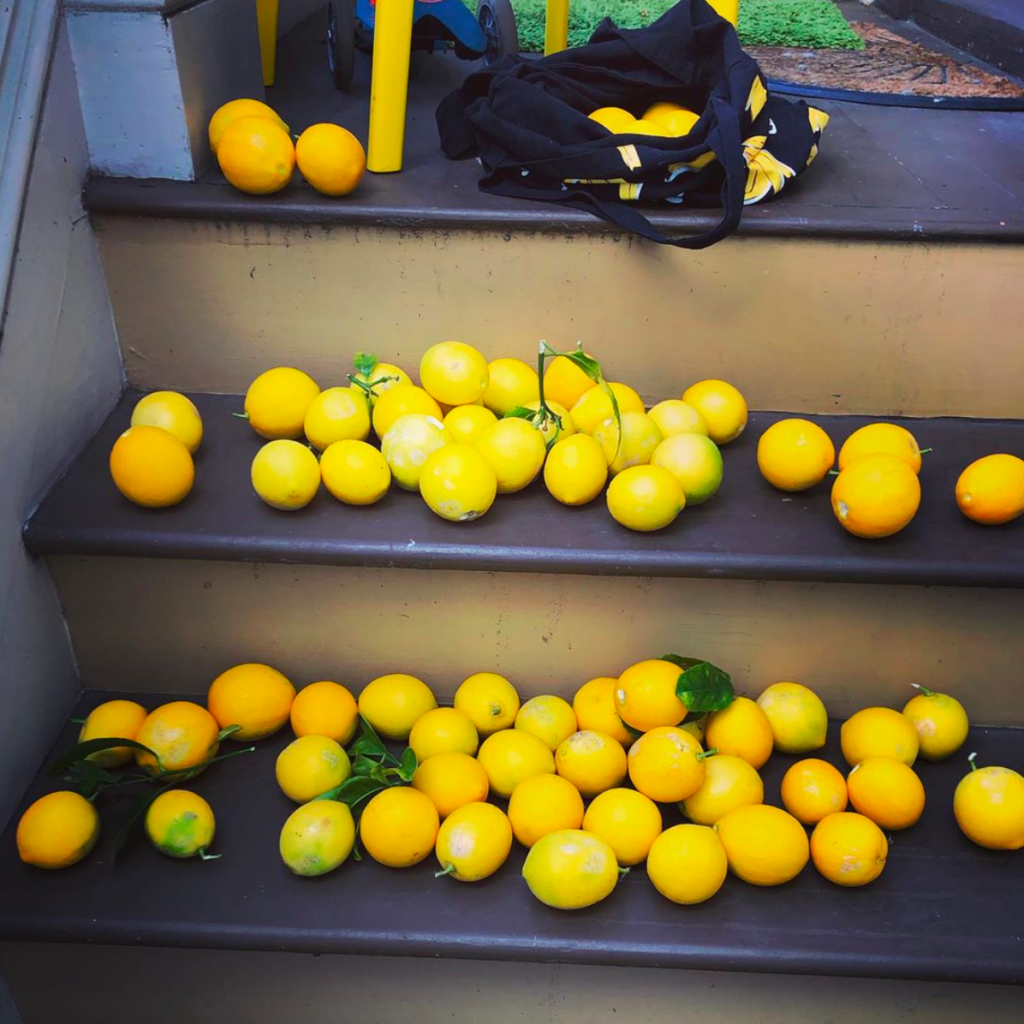
GROWING THINGS HAS NEVER been my forte. I’m great at starting out, and get very excited about beginnings. I can even handle endings pretty well, although that’s more from experience than desire. But I am somewhat less good at maintenance—the fuzzy middle of projects and ideas. But this weekend, as I picked my way through our lemon tree and grabbed another haul (our third or fourth this year) I realized that maybe I was looking at it wrong. The middle is just where beginnings and endings meet, over and over and over. And you get to keep harvesting all the time.

I’m still attempting to catch up on my reading pace after it was almost demolished by the pandemic. Enjoyed Abi Daré’s The Girl With The Louding Voice (which broke through after winning a competition for the best unpublished manuscript, and I can imagine why.) Closely read (or re-read) Ruha Benjamin’s Race After Technology, and I’m just about to finish, on my son’s insistence, Natboff! One Million Years of Stupidity. We’ve really enjoyed the whole Mr Gum series, and I am envious of the freedom and stupidity of Andy Stanton’s writing for kids.

§

My stories this week: Coming back from vacation straight into magazine-issue-closing territory meant limited public output. Both of the stories I put out revolved around conspiracy theories, which seem to be rising in importance as the election draws nearer: Abby Ohlheiser on whether it’s too late to stop QAnon, and if not what it would take; and Joan Donovan on the conspiracy-driving nature of social media.

Going to keep it short this week.

Panel: Tackling The Oft-Dreaded Negotiation

Leave a comment
Work

This guy and his enormous hair took part in a session put together by The Writer’s Co-op (listen to their podcast!) and Study Hall (join their community!) to discuss negotiation—one of the most terrifying things there is in the world of freelancing.

I know the concept carries a lot of anxiety and baggage for people, but my experience—as a freelance writer, an editor, publisher and business owner—I find the mystique around negotiating a little odd. Yes, there are conversations about what work is worth, tweaks happen, sometimes things don’t work out. It’s just how businesses work. And it’s a lot more ordinary than people think.

(Or, to put it another way: contract negotiation isn’t a battle or even a game to me, it’s the moment that sets the table for the real work that you want to happen—the work that you do get enjoyment and satisfaction from. And if you begin a project by going to war with each other, I suspect the collaboration is going to be less successful. I realize not everybody feels this way.)

The other participants (Jenni Gritters, Wudan Yan, Kyle Chayka, Evan Kleekamp and Sarah Gilman) were more lucid and practical than me, I think, but I was glad to be part of it.

The takeaways I thought were most important:
—The best way to get things you want is to ask for them.
—There are many things other than your rate that can be negotiated.
—Decide what things are important to you and be prepared to walk away if you can’t get them.
—Talk to each other! Preferably on the phone!

On reflection I am, I suppose, a very lenient editor who has been lucky to not work (or not build) places that use contracts as weapons. I see my job as trying to get the best material in front of readers while channeling as much money as possible to writers; I don’t mind “stupid” questions; I bear few grudges. If that changes, it’s probably time to stop.

Here’s the recording.

Taking time

Leave a comment
Workbook

“Digital computers are synonymous in the popular mind with precision processing of information. However, when it comes to the basic information processing task of keeping time, they often perform worse than expected. To see how bad computers can be, consider some things that are better at keeping time. The gold standard in timekeeping is the sundial, which is a perfect analog timekeeper. However, sundials are not very practical and are not used to keep time on computer networks. The U.S. government, for instance, often needs to run its computer networks at night or on cloudy days.”
How Many Seconds in a Second? Michael Hsieh and Doug Wood, FDD

Pandemic parenting

Leave a comment
Uncategorized

Anne Helen Petersen’s latest words resonated with me:

I am not a parent. I am, however, a person who hears and sympathizes with so many of the struggles of managing to work and parent right now, and as Chloe Cooney put it all the way back in April, “the parents are not okay.” Not the parents who are essential workers. Not the parents who are taking care of infants, or toddlers, or elementary school age kids who desperately miss their friends, or even teens. Not the parents who are trying to figure out what to do about school. Not the parents who are trying to figure out if it’s okay to use their own parents as caregivers. None of the parents are okay.

The pandemic has been hard on everyone, in almost every way imaginable, and often in the most tragic manner. But the impossible triad of adulthood, parenting and work is the one that’s really had me under its thumb.

Taking action

Leave a comment
Uncategorized

They talk about living your values, of walking the walk. John Lewis did it, figuratively and literally.

This morning I heard a Republican on the radio lauding Lewis for a life spent in service. The speaker noted, of course, Lewis’s leadership in civil rights, and specifically pointed out his dedication to non-violent protest and civil discourse. Given the moment, it was almost too easy to read between the lines, to catch a whiff of the subtext cast by Black Lives Matter. What they didn’t say, what they never really say, is that non-violent protest, that being civil, is not the same as staying quiet, and it is not the same as not acting.

A few years ago, when I read Raymond Arsenault’s Freedom Riders, it became extremely clear to me how direct action operated during the civil rights movement. Speaking out against injustice—riding the bus knowing that it would lead to confrontation, of marching in the face of threats of police brutality—exposed the apparatus of suppression.

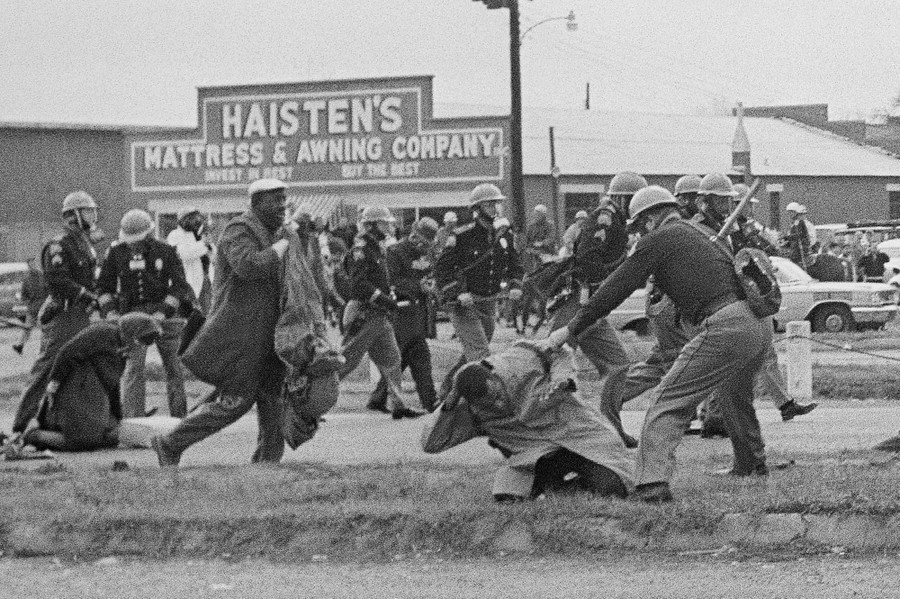
Direct action assumed, for the most part, that violence would occur, but that it would be driven by the police or the white community; the system’s immune responding the only way it knows how. True, the protesters were largely non-violent; that doesn’t mean the system’s response was peaceful. Look at Lewis, in the front of the photograph, being beaten by a state trooper while on a voting march in 1965.

§

I don’t want to write about The Letter, but seeing the tributes from my friends who were lucky enough to meet or know John Lewis, or just to be able to tell him what his work meant to them, it reminded me of the same. Somebody can call for civility, for discourse, for more speech, and they can honestly mean it. But being civil doesn’t mean doing nothing when you see somebody being hurt, and sometimes more speech requires protest; it requires direct action.

§

We all see our lives and experiences through a lens. It’s easy to see yourself and your decisions on the right side of history, like our Republican friend did. But it’s always worth asking yourself if you’re the protester or the system.

§

I know which side Lewis was on, and I know that it’s 59 years since he rode the bus. Fifty nine years, and we’re still marching.

Rest in power.