The plastic problem

Leave a comment
Link
Inside the Legoland California build room

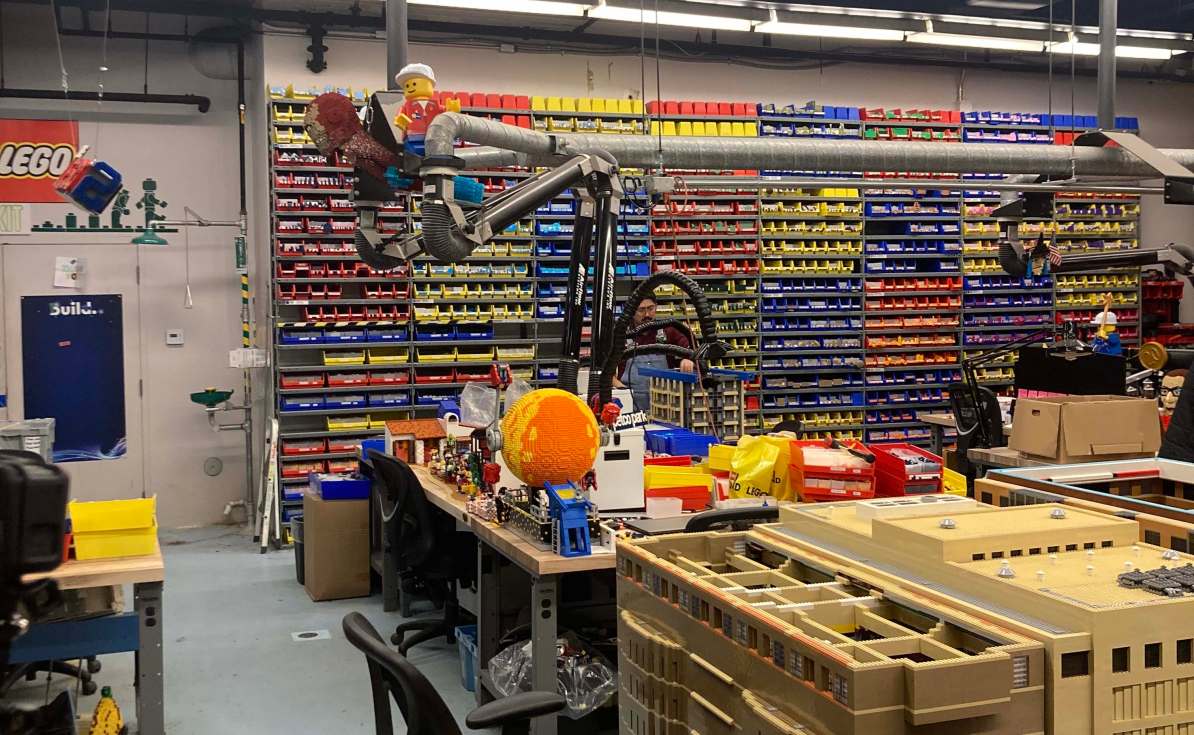
Earlier this year, we went to Legoland California for a family trip. We were lucky enough to get a VIP tour of the build room, the place where designers and architects build the displays. Inside, the tables were groaning with models-in-progress, and the walls were stacked with drawers containing every conceivable size, shape, and color of Lego brick. I was excited, of course, a fan in his element. We all were.

But I also had this sudden moment of realization: I don’t know how long it would remain. It was like a graveyard, a paean to plastic. How long would a place like this last? How long should it?

Take away my petrol, and I’ll drive electric. Bump up the cost of air travel and I’ll pay for my emissions—or stay home. Make plastic bags forbidden, and I’ll use paper. But take away my Lego bricks and you’ll have a riot on your hands. 

I know a lot of people (parents, for the most part, but definitely not just parents) for whom Lego is their dirty little environmental secret. Their homes, like mine, are essentially playing host to an extra, unmentioned occupant: a massive blob of fossil-fuel derived plastic, that has been made palatable because it’s been chopped up into little 2×4 rectangles and peppered with studs. 

Many of us were invested in Lego’s plan to go green by using recycled bottles for its products instead of oil-intensive ABS plastics. And many of us were disappointed when the company revealed that it was ditching the idea.

The reason they gave wasn’t financial cost, or time. It was, they said, because the switch would have actually created an even bigger carbon footprint. Says CEO Niels Christiansen:

“In the early days, the belief was that it was easier to find this magic material or this new material… that doesn’t seem to be there. We tested hundreds and hundreds of materials. It’s just not been possible to find a material like that.”

I applaud the honesty in some ways. No doubt they will get pelters for this. It would certainly be easier to say “we’re carrying on with this bottle plan” and just hope nobody looked too closely. Numbers are malleable, and enthusiasm can paper over many cracks, the PR problem can be something to deal with further down the line. But they seem to be admitting reality—a reality that many people and companies face. We’re so invested, so enmeshed, in an unsustainable practice that the obvious ways out are worse than staying still.

The real question becomes: what’s next? Lego says its plan is to make the ingredients of ABS a little more recycled or derived from plant-based materials; to move the needle a little more slowly, but perhaps more effectively. 

But when your whole business is built on something environmentally pernicious, the reality is that perhaps there just is no good answer. It’s a fundamental challenge to what Lego is.

My mind went back to that Legoland visit. What will it seem like in a future without plastic? Will it be simply unfashionable or seen as totally inhumane? Is it bloodletting or a lobotomy? 

In a few generations, I suspect society will look back at factory farming and see it as utterly baffling, barbaric practice. Why did we ever allow it to happen? Our children, and their children, will find it impossible to understand why we did what we did. Why we shared our information with advertisers. Why we used water so freely. Why we smoked cigarettes.

Perhaps one day we’ll look back at Lego and all that ABS and be shocked and ashamed that we ever liked it at all. If I tell my grandchildren about our visit to Carlsbad, maybe they’ll be repulsed by the idea. A whole theme park paying tribute to plastic—or a museum celebrating our own arrogance.

Wenner speaks

Leave a comment
Media / Quotes

Lots said about Rolling Stone founder Jann Wenner’s interview with David Marchese—from his comments on inarticulate black musicians, to his inability to see the limits of his imagination, to his shruggy response to the UVA campus rape story. But beyond the headline-grabbing parts, the most interesting to me is this answer: his unapologetically defensive boomer viewpoint, so absolutely of its time: “What didn’t the rock ’n’ roll generation do? I mean, it didn’t get everything done. But I have no fundamental, deep criticisms. Is there something that you think we didn’t get right?”

Related reading:

Nice historical overview of Rolling Stone that gives you some of the context

• Everyone should read A Bomb in Every Issue, the fantastic, rollicking tale of Ramparts magazine, a progenitor of Rolling Stone.

The most cyberpunk thing I’ve seen in years is… ABBA

Leave a comment
Media

There are moments when you realize you are living in the future.

Watching a driverless car pull up to a stop sign, front seat empty, a handless steering wheel starting to turn. FaceTiming a family member on the other side of the world, remembering what it used to take to talk with them 15 years ago. Seeing a moment, taking a photo, editing it, contextualizing it and sharing it with a global network of people in an instant. It’s up to you whether these are utopian or dystopic, but they are times when a tomorrow that you once imagined is poking its head through into the now.

But there is absolutely nothing that made me feel that keen and conflicted tension of the future arriving around me than sitting with 3,000 other people to watch performing avatars of four Swedish pensioners.

Earlier in the summer, when we were back in the old country visiting family, we took a trip to see ABBA Voyage in London. I didn’t really know what to expect, but I was intrigued. There was talk of holograms. Astounding visuals. A performance that took a team of thousands and cost millions to make, but was also hard to describe. What was this mystery show?

It turned out to be one of the strangest experiences of my life.

Voyage is a 90-minute multimedia performance that takes place in a custom-built arena, mostly focused on digital avatars of Agnetha, Anni-Frid, Benny and Bjorn, projected on huge screens, singing their way through the band’s greatest hits. And for an hour and a half I veered through a frankly baffling range of emotions. I was amazed, terrified, confused, surprised, joyful, disgusted, bored, thrilled… and want to go back to see it again so I can understand what happened to me.

The basics we can put to one side. The show features most—but not all—of the big numbers, plus a few new ballads that felt like album fillers, ABBA-esque melodies that almost could have been written by AI. There are light shows, vintage footage, and animated interludes that give it all some texture, and—smartly—a live band who pop up to give the whole thing the zing of a flesh-and-blood concert. The audience, meanwhile, was a mixture of bopping boomers and glittery Mamma Mia-era zennials (they were also overwhelmingly white, which felt a little odd in such a multicultural city.)

As a whole, Voyage is exceedingly well crafted: an incredibly smart combination of scale and movement to combine the best elements of concert film, music video and live show.

I don’t think the band members are holograms, just extremely well-lit digital models on massive screens. But from a distance, when the avatars are human-scale and standing or dancing around the stage, they are indistinguishable from the real thing. In close-up, though, they are a little less convincing: movements that are almost the real thing; eyes that miss a little sparkle; textures that are not quite there.

It left me almost constantly disoriented. At times it was close enough to believe you were there, watching the band 40 years ago; at others it was like watching the most expensive video game cutscene in history. One moment I was inquisitive: was what I was seeing real? The next, I was uncomfortably far into the uncanny valley. 

The crowd was euphoric, for the most part. They had an emotional connection to the songs, and an awe of the band that transcended everything else (Agnetha drew wolf whistles at some point, a category of multifaceted ick I hadn’t experienced before.) Their enthusiasm added to my confusion. Was nobody seeing what I was seeing? Were they expecting these avatars to be alive?

Then I argued with myself. Don’t we have the same reaction at the cinema? When people go to movies and clap the action, they don’t expect a response from what’s on screen. Don’t we get invested in video games and their almost-real digital people? We have loved fiction for as long as we have been people. Don’t people gather by the thousands for virtual festivals in Fortnite and Roblox or to watch augmented reality perfomances by Billie Eilish? Am I not a hypocrite?

When I go to a concert I might hope to make eye contact with the performer, but I go to football matches and (as my friends and family can attest) shout vigorously at the players, even though they’ll never hear me. And I’m looking forward to seeing the re-release of the Talking Heads concert movie Stop Making Sense—a performance of roughly the same vintage as Voyage.

Those conflicting signals and counterarguments are all true, I suppose, but it was the combination of formats and the effort that generated the emotional response that took Voyage to a new place for me. It challenged me. It walked a line between the real and the unreal, between history and simulation. What did I experience? Who did I experience? Did ABBA even really exist? And if they didn’t, would it matter?

At the end, the audience—whooping, ecstatic—filed out of the arena and headed towards the train station. It was the height of summer, late in the evening. The future had just reached through into my present, and the sky above the city was the color of a television tuned to a dead channel.

How does the future make you feel?

Leave a comment
Media / Quotes

Lots of little gems in John Seabrook’s 1994 New Yorker profile of Bill Gates, but this note stuck with me particularly.

For years after the telephone was invented, in 1876, people thought it was a device that would transmit news, drama, and music: the idea that the telephone was a way to talk to other people took about twenty years to sink in here, and about thirty years in Europe. Similarly, today one hears about shopping, banking, and renting movies on the information highway. These are all possible ways of making money, of course, but the point of the information highway, it seems to me, is that it offers a new way of talking to other people.

The story itself is an interesting case in how you write about something new. The article still stands up, more or less, but so many of the ideas that are revelatory to Seabrook at this specific moment in history—email, the internet, even computers and software—became so normal so soon after. How can you capture that sense of novelty and not look foolish when tomorrow comes to call?

Things I found this week (53)

Leave a comment
books / Link / Media / Things my friends have made

Brocken spectres are the terrifying ghosts that appear when you cast a shadow on a cloud that has a light source behind it. 

• Marcin Wichary is getting ready to launch his manyyears-in-the-making book about keyboards, Shift Happens. The effort and dedication to making this thing is visible in every element of how he has put it together, including the book’s delightful website.

Did you know the CIA has a museum?

How to disappear completely

Leave a comment
Link / Media / Recommendations / Things my friends have made

There are many ways to become invisible. If you’re a person you can try to go underground, take yourself off the grid. If you are a new US military bomber, you can use the laws of physics and materials science to stay off the radar. And if you are a glass frog, you can simply turn your blood transparent.

We’re transfixed by invisibility, the art of disappearance. It’s magical.

Sometimes that absence is a problem: a lost job, a family member who is suddenly gone. 

But other times, invisibility is success, like the panic about the hole in the ozone layer. That particular anxiety only disappeared because we stepped in and stopped the worst from happening.

“Had the world not banned CFCs, we would now find ourselves nearing massive ozone depletion. ‘By 2050, it's pretty well-established we would have had ozone hole-like conditions over the whole planet, and the planet would have become uninhabitable,’ says Solomon.”

But counterfactuals fuel conspiracy theories. It’s easy for deniers to argue that this disappearance wasn’t the successful avoidance of danger, but evidence that the threat was never a real problem in the first place.

Progress is often about disappearance, and the conflict around it. Does progress mean something is really gone? Or has it merely made the problem invisible?

That vanishing act, I think, is part of what causes worry around technologies. Sometimes work is genuinely gone, or transformed completely: think of an engine doing the work of a human.

But sometimes it’s just under a veil, the mundanity masked to look like magic. Take Laura Preston in N+1 on being a fake smart chatbot.

And often it’s in an awkward spot between the two. Military drones, for example, simply make the job of killing remote. And the driverless cars that are starting to appear, for real, are exhilarating and terrifying too.

And look at Eileen Guo’s latest investigation, exposing how the Roomba vacuum cleaner often takes intimate photos as it makes its way around the house—and that those images sometimes end up leaked into the world. In this case, training an AI to do its work inevitably requires human intervention, which in turn leads to exposure and invasions of privacy.

Out of sight, out of mind, as they say. Whenever I’m faced with “progress” I’m just left wondering if this is magic, or a mask.

World Cup of Food #5: Korean BBQ

Leave a comment
World Cup of Food

A few years on a visit to Seoul, I found myself stuck. It was my first trip to east Asia, and I was riding around on public transport to meet with a friend when I hit the trifecta of travel panic: I tried to use my bank cards and they got blocked; my European phone didn’t work on Korea’s networks; and I couldn’t read hangul. My resources were zero and there was little way to get my bearings. It was entirely confusing… and also a thrill.

There are those moments in life when you are so completely out of water that you just have to immerse yourself in it. There are no options but to give in, let it take over. I had a safety net: I knew where my hotel was, and I had enough city geography to know roughly where I was. But I was stuck, gasping for air. So I just let the universe wash over me. I found my way. I asked for help. I got to where I needed.

I’m not sure if that trip was the first time I ate Korean food, but it was still a revelation to eat my way through the grilled meats, the banchan, the bibimbap. I love pickled and fermented vegetables; if I ate nothing but rice I would be pretty happy. So what I’m saying: Korean food is all the good stuff. 

I got pretty sick over Thanksgiving (did you spot the medicinal drink when I was noshing on Polish food?), so we took the easy option for this one and ate from Purple Rice, one of our neighborhood go-tos. It used to be called Stone Bowl, also Korean, and I don’t actually know if it’s the same owners and a new lick of paint, or a different place entirely. There’s plenty of good Korean food around the city, and this one is a little expensive for what you get, but it’s solid and simple. I wish their wings were nicer. I had barbecued short ribs, rice, banchan, kimchi pancakes. I let it wash over me. Delicious.

World Cup of Food #4: American feasting

comment 1
World Cup of Food

Thanksgiving is my favorite American holiday.

It’s not pure, exactly—name me a celebration that doesn’t carry some baggage—but it is simple. Get together with people you care about, take a moment to reflect on what you’re thankful for, eat until your eyes roll around in your head. It’s very direct.

No country is as in love with itself as the US is, and nothing reflects that love as much as the Thanksgiving plate. It swoons over a glossy veneer, is driven by an ahistorical narrative, and demonstrates an addiction to traditions that only go back a generation.

Usually it’s centered on a meat that nobody really likes, since the only time you really see turkey outside is either when it’s pretending to be ham or when the eater is pretending to be Henry VIII devouring a massive leg at a Renaissance Faire. Meanwhile, there’s a motley cast of minor players that hang around at the edge of the stage, unholy concoctions across the board. Say hello to the green bean casserole, courtesy of Campbell’s soup company; or the sweet potatoes that may be accompanied by marshmallow.

Still, it’s the act of getting together more than the specific contents of the meal that matter. So in our Thanksgiving dinner, eaten with friends, the turkey was substituted out for a gigantic lump of rare beef, buttressed by some frilly yams, green beans, sweet glazed carrots, and a bready stuffing.

We got together with people we cared about, appreciated what we are thankful for, and ate until we were defeated. I’d call that success.

[Read more about the World Cup of Food.]

World Cup of Food #3: Polish pierogi

comments 2
World Cup of Food

I spotted Seakor for the first time when we were shopping for furniture a few weeks ago; it’s an unassuming Polish deli on a corner of the Richmond opposite a gas station, graced by a sign that says “& SAUSAGE FACTORY.” Who wouldn’t be intrigued?

It was always easy to get Polish food in the UK, one flat we had in Brighton was slapped next to a Polish corner shop (or perhaps the shop was slapped next to the flat) but although the shelves were stuffed with vowelless delicacies, I’d never really noticed.

At Seakor, I explained my World Cup odyssey to the chap behind the counter and asked him what a quick Polish lunch might look like. He wasn’t much interested in the football, but he did offer us some smoked sausage to taste. It was good, and they say it’s the best Polish deli in the city, so we got a lot of pierogi and a trio of the sausageman’s recommendations, along with some ginger cookies (the wrapper said OUTSTANDING SMACK, which was enough for me).

Meanwhile an older couple navigated their way through the food behind the glass, and a Polish woman chatted with me about the scorelines earlier in the day and Lewandoski’s missed penalty. Her boyfriend, she told me, was English—a couple of minutes later he arrived and revealed himself, disappointingly, to be an Arsenal fan.

We got home and threw the food together; a quick boil, then a fry to brown them off. They were sauerkraut and mushroom; doughy and heavy. Coming so soon after the German dinner, I had to take it slowly and simply—no extras, just a few nibbles. It was a hefty plate that gave me a lot of time to think.I thought about the missed penalty. I thought about the OUTSTANDING SMACK. And I thought, this food probably isn’t for me.

[Read more about the World Cup of Food.]

World Cup of Food #2: German essen

comments 2
World Cup of Food

German food gets a surprisingly easy ride. We all know the jokes about English cuisine, or the wincing references to Scandinavia’s pickled herrings, or the apparently endless parade of cabbage-based dishes that represent an Eastern European dinner table. And yet somehow German grub—which essentially combines all of those into a single menu—doesn’t come in for the same skepticism.

At least, that’s what I figure given the number of German food spots around the Bay. Sausage and beer are easy to come by at a range of places, even if covid did not give the area’s Deutschy places a particularly easy ride. Walzwerk, a cosy East German place in the Mission that I particularly liked, closed down in 2020; Lehr’s, a German import store in Noe Valley that I refuse to visit because of its longstanding front window typo, shut down but is apparently re-opening.

Schnitzel became a go-to comfort food for us during the pandemic, partly because the act of making it was enjoyable—hammering, breading and frying the meat gives you a feeling of accomplishment, plus I learned a kind of ad-hoc spaetzle recipe from Kenji Lopez-Alt that is both incredibly easy and fun to put together.

But I was interested in what the local restaurants could offer up—so we caught the beerhall vibe at Suppenküche, which occupies a little corner in Hayes Valley. It was a busy night, and it’s a noisy share-the-table kind of place, so we made our way through pretzel, reibekuchen, eggs, beets, and sausage before heading into schnitzel territory. Washed it all down with a dark beer. I think my family enjoy German food more than I do, and it sits heavy—I am still full 12 hours later—but it was a solid choice.

[Read more about the World Cup of Food.]