“There’s a lot of trust involved”

Leave a comment
Media

When I posted recently about fakes and forgeries and my shock that United Airlines had discovered counterfeit parts in aircraft engines, one commenter pointed out that there is a long history of fraudulent parts in the airline industry. (A friend in the trade would tell him about “fake brake liners in authentic looking boxes”) Well, that’s even more terrifying.

But to get an idea of the scale of where things are at right now, it’s worth reading this Bloomberg story about “how fake parts infiltrated airline fleets”:

It was all a charade. The obscure distributor hoodwinked the biggest names in aviation, selling thousands of jet-engine parts with forged airworthiness records, according to regulators and industry executives. In some cases, AOG allegedly sold refurbished used parts with paperwork claiming they were brand-new, potentially netting huge profits in the process.

Great walkthrough of the issues, the players, the reasons, and the consequences.

Creative couples

Leave a comment
Media

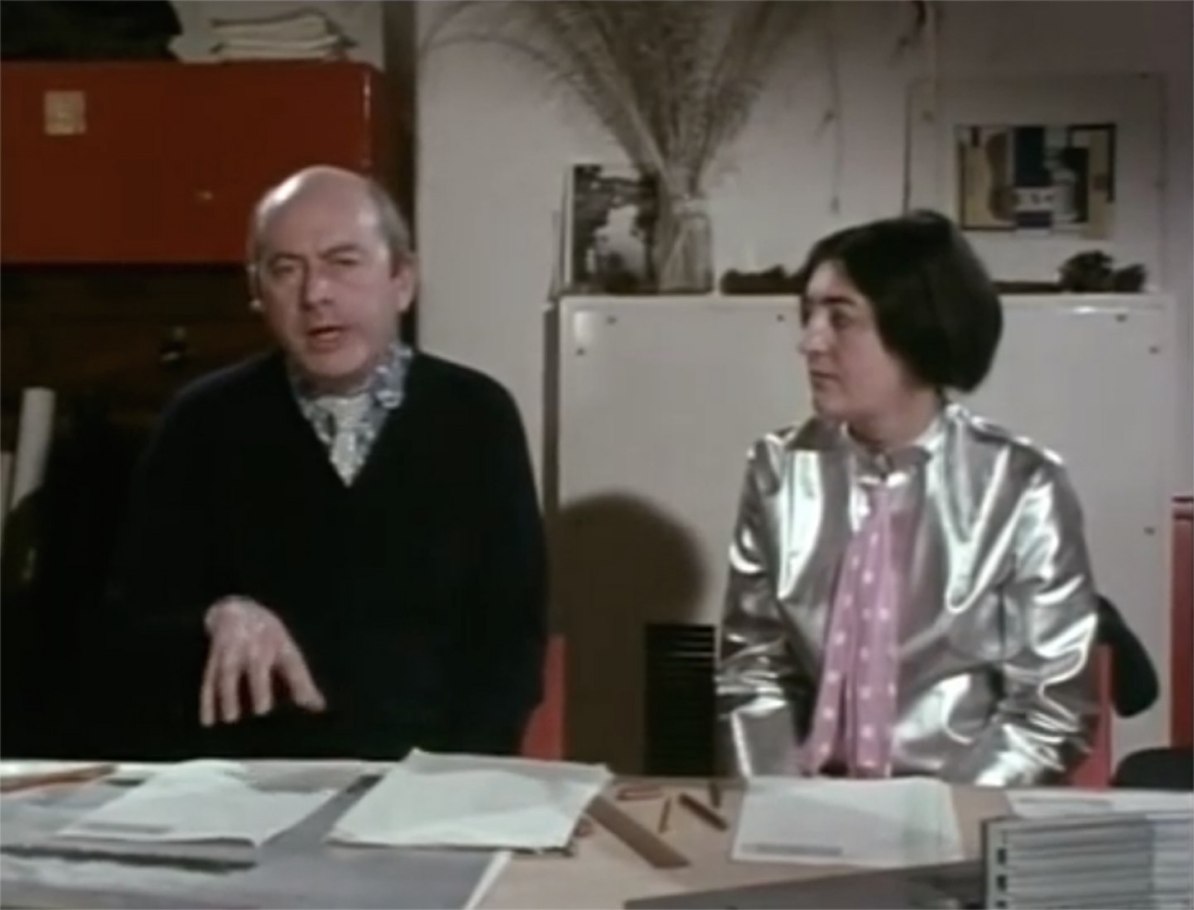
Alison Gill and Peter Smithson were just a couple of kids from Northern England when they met as architecture students at university in Durham in the 1940s. They had a lot in common: their obsession with buildings, of course, but also their politics and their vision for the future. Their attraction and mutual sympathies turned into love; enough to draw them together, to get married and have three children; enough to drive them to become leading lights in Britain’s architectural boom after the second world war. 

The couple, who started working for the London County Council almost as soon as they became “The Smithsons”, co-opted a Swedish phrase and ended up coining the English term “New Brutalism”—an approach that took buildings and stripped them down with a mixture of hard-edged rawness and technocratic optimism. 

Together the Smithsons helped shape British architecture for years, wrestling glass and steel and concrete, and getting into fights with people like Reyner Banham who really saw the world in quite a similar way, just not quite similar enough. What they didn’t make, they influenced: places like London’s Barbican and South Bank all have echoes of the Smithson’s beliefs—even if the buildings don’t officially carry their fingerprints.

Their philosophy was the look of my childhood, the die that cast so many municipal buildings and council estates across England in the 1970s and 1980s. Our town was built in the 1960s as “overspill” from London, and along with it came cut-price architectural echoes. I remember as a kid sitting in the waiting room of our local council office, wriggling in the hard moulded plastic chairs, seeing the concrete wet outside the door and the second hand of the clock bruising its way around the dial. I didn’t know who the Smithsons were, or how they worked together, but they created one of the most potent flavours of my childhood.

You can see their vision in this film by the poet B.S. Johnson (no relation) on their design for the Robin Hood Estate in East London.

What were the Smithsons outside “The Smithsons”? I’m not sure. But I do know that couples and creativity make for a fascinating subject.

We see so many examples of when two people come together and make things that are bigger and better than either of them can achieve on their own. Sometimes they make that work separately, but often together. Usually what lies between them is love, but not always. Some are romances, others are tragedies. 

The Smithsons are my own parochial example, but what about Charles and Ray Eames? Look at Ted Hughes and Sylvia Plath. Burton and Taylor. Frida Kahlo and Diego Rivera. Or Lennon & McCartney, if you are happy with platonic partnerships. There is so much power in a pairing.

There are plenty of straightforward power couples of course; two people whose trajectories are so great and magnetism so tremendous that they each exert power and influence. But it’s not the counterparts I am interested in, it’s the co-conspirators.

Who better to help you express the inexpressable than somebody who knows you so intimately? Who else can unlock your ideas more than the person you are with most of the time? What is that magic that happened when Joan Didion and John Gregory Dunne got stuck into each other’s work, or when Jasper Johns and Robert Rauschenberg talked alone at night? 

There are so many stories in it all, and so much to learn from.

Related reading:

Ghosts

Leave a comment
Media

Writing is many things, and one of them is channeling. As a writer you are a conduit, a crucible. You are a voice, whether you are interrogating your own ideas, bringing life to characters fictional or real, or simply reporting what you have seen so that others can understand. When you write you are often channeling other people directly, and when you are not it is because you are doing it indirectly: building on the ideas and thoughts of all those people who came before. 

You are the vessel.

Nobody understands this more than the ghost—the invisible writer behind the autobiography, capturing the story, piecing it together. The mimic, the unseen actor, the editor before the editor. 

There has been a lot of fun in ghostland recently, with the news that actor Millie Bobby Brown wrote a bestselling historical fiction novel that she didn’t actually write. And it got extra attention because it is, apparently, Very Bad Indeed (the compelling evidence, if you haven’t seen it, is boiled down in the opening lines: “It was hot — the kind of heat that makes you long for the weather to cool down and the leaves to fall, but then you berated yourself for wishing away the good weather.”)

Earlier this year another ghost, John Moehringer, who wrote Prince Harry’s memoir Spare, detailed his work and approach in The New Yorker. The story was a memoir itself—or perhaps a prelude to a memoir—though I presume he wrote this one alone. It was an accounting of why somebody ends up a ghost. A reckoning, too, with critics and the media and Twitter griefers. 

It didn’t make me want to read the book. But one thing that did grab me, though, was Moehringer’s side-eye toward Ghosting, Andrew O’Hagan’s extraordinary 2014 piece about his life as Julian Assange’s ghostwriter. I remember exactly where I was when I read it: usually I save the London Review of Books for reading in print, but it takes a little while to arrive in California, and I was so greedy to devour those 25,000 words that I read the whole thing on my phone in one immense sitting, at home, in the back of a taxi, in the office. I just couldn’t stop. My screen was worn out from scrolling, my eyes pinched and puckered by the end.

O’Hagan’s piece made me understand what ghostwriting really was, and how—even when it was a professional slalom, and whether it features princes or protesters—it is really no different from most other writing. It’s clairvoyance: you are reaching into the minds of others.

It felt like a little slander to accuse O’Hagan’s ghosting technique as unconventional—“it sounded to me like Elon Musk on mushrooms—on Mars.” But then again, it felt deeply appropriate for a royal ghost to be worried about decorum. And then, in fact, it turned out that the criticism was actually an attempt to extract a pound of flesh for what he felt was a bad review of Spare. Maybe visiting petty revenge upon your critics is even more in keeping with the crown?

It made me think of Salman Rushdie’s line in The Satanic Verses: “Now I know what a ghost is. Unfinished business, that’s what.” There’s a man who knows about revenge, petty or otherwise.

(Photo shared under CC license BY-SA 2.0 from Flickr user Marketa)

Mind’s eye

Leave a comment
Link

As somebody with no real ability to visualize, I am fascinated by the fact that other people can actually see things in their imagination: the existence of an actual mind’s eye. (Those of us with some form of aphantasia always remember when we discovered that this wasn’t just a metaphor, but a lived experience for some people—usually when they read this New York Times piece that went viral in 2015.) And I’m not the only one who wants to know more: I see the conversation come up again and again and again and again.

Oliver Burkeman asked a good question recently: is this about how we talk about what we “see” or is it what we see? It’s something I wonder, and certainly something I hear from people with some visual ability whenever the subject is discussed. But as somebody pretty far to one end of the spectrum, I suspect that—while the edges of these things are not rock solid, and some people may be confusing their ability to “see” with their ability to “perceive”—there is a true and genuine lack of visual perception for many of us. We aren’t describing the same thing with different language: there is a wide range of capability here.

(The editor in me also wonders: Why has nobody yet written the definitive longform piece on the mind’s eye, explaining the state of the science and capturing what it feels like to be hypervisual or unable to visualize? I would pay good money to read it!)

Fake news

comment 1
Newsletter

A man in Florida pleaded to guilty to selling $16 million of fake HIV drugs to pharmacies. A German museum worker was convicted of swapping expensive artworks for forgeries and then selling the originals to fund his lavish lifestyle. And it was revealed that some United Airlines had discovered counterfeit parts in some of their aircraft engines. Barely a day goes past without news of counterfeits, forgeries, pirate material, copycats, plagiarists and imposters. We can’t avoid them.

Fakes and frauds have a long history, from copycat Roman statues of Greek originals to Piltdown Man to the Hitler Diaries. In days gone by, when information was harder to come by, it was common for paintings or sculpture from elsewhere to be copied, and easy (if you chose) to pass a copycat off as an original work. Witness the Turin Shroud: is it a genuine relic or medieval fake? (And did it even matter to those who worshiped it?)

When printing arrived on the scene it enabled copying to flourish: publishers looking for a big hit would find popular books from overseas and produce their own unsanctioned copies for their local markets and reap the profits. By the late 19th century the author Mark Twain was so angry about pirate copies of his work popping up in England that he lobbied for new copyright laws and invested nearly all of his fortune into new-fangled printing technology. It almost bankrupted him.

Exploiting this information gap was something that lasted a long time, and perhaps still can, from time to time: in 1969, when “Time of the Season” by The Zombies became a chart smash, unscrupulous promoters put not one but two fake versions of the band out on tour to try capitalizing on the song’s success. 

Mass manufacturing added another twist. Not only do the tools of manufacturer mean that original ideas become easier for rivals to mimic (Sony co-founder Akio Morita once said his company was lucky if it got even six months before rivals would copycat new products like the Walkman) but passing off your fraudulent version as the real thing gets easier and easier too. In fashion, particularly, where exclusive branding is part of the product, it’s big business. Fake labels. Fake clothes. Fake bags. They’re everywhere. Some estimates put counterfeit fashion at $600bn a year.

And if physical piracy is a big issue, then the digital world has shifted it up by an order of magnitude. After all, when the original artwork is merely a collection of ones and zeroes, they can be replicated perfectly and spread through new markets and distribution networks. It’s what helped Napster rise, and part of what led to Amazon’s recent influx of terrible AI-generated spam books.

It’s many years since I traveled to Shanghai to profile Jan Chipchase for Wired. Jan was—and remains—an utterly fascinating individual, but really the assignment gave me an opportunity to visit China and get a better understanding of the country’s “shanzhai” culture. 

As Byung-Chul Han’s book on shanzhai puts it, the word was a term “originally coined to describe knock-off cell phones marketed under such names as Nokir and Samsing. These cell phones were not crude forgeries but multifunctional, stylish, and as good as or better than the originals.” 

I was fascinated by this culture precisely because they walk the very fine line between copycats and forgeries. They have the right look, but the audience has the knowledge. When you see a shanzhai edition of Harry Potter and the Chinese Porcelain Doll most people know that it’s basically fan fiction—just as when you see a kid wearing designer-branded clothing that should cost them thousands: for the most part everybody knows they’re fake—perhaps stolen, at best. But the signals it sends are still meaningful.

That’s what I witnessed in China—a kind of forgery-as-innovation—or, as a young software developer with roots in shanzhai told me at the time: “Shanzhai products are innovative because they’re mainly aimed at niche markets… the big brands need to design for the mainstream, for the mass population.”

Fakery has taken a different turn in the years since: less about forgery and more about trust—or mistrust. 

Misinformation and propaganda is spread by networks of trolls supported by fake followers and click fraud. “Fake news” became a battle cry for the Trump administration, even though, for the most part, the news wasn’t fake. And now AI—whether in text material produced by generative language models or in video deepfakes of influencers used to hawk products 24/7—has us questioning whether what we’re seeing is real at all. And there’s been a decline in fact-checking services as social media platforms scale back their efforts (in part because lots of people apparently want bad information, in part because they can’t control a problem they have exacerbated.)

So, how do we deal with fakery in this new world? And what tools do we need? The problem might not be new, but the shape of it is changing faster than we can keep up with.

Related reading

Genius vs scenius

Leave a comment
Quotes
“What really happened was that there were sometimes very fertile scenes involving lots and lots of people – some of them artists, some of them collectors, some of them curators, thinkers, theorists, people who were fashionable and knew what the hip things were – all sorts of people who created a kind of ecology of talent. And out of that ecology arose some wonderful work.”

Brian Eno on the concept of scenius, quoted in The Creative Life.

Making decisions together

Leave a comment
Link

“At the end of the day, the benefits of making decisions together far outweigh the extra time it sometimes takes to include people in decision making. In a time of journalist burnout and cynicism, bringing in democratic and power sharing models allows staff to feel heard, valued, and excited to come to work—and stay here.”

Intrigued by this democratic decision-making framework for news organizations put together by staff from The Appeal. Won’t work everywhere, but trying new approaches is always interesting. (People give alternative structures a lot of stick, but I actually got a lot out of holacracy at Medium, for example.)