Loved this John Willshire talk about a way of conceptualizing and mapping projects that he uses. The content is interesting to me (planning projects is really something I could get 1000% better) but I enjoyed it most for its presentation. It struck me as a great example of what making an effort can feel like in this era of Zoom presentations and conferences.
So many events really haven’t changed their approach—just ported it online—and those who do alter their style to adapt end up creating something that feels YouTube shiny and over-polished. But John’s presentation really drew me in, without being flashy. A perfect combination of well-told, informative, personal, and cosy.
We’re all spending too much time at home watching TV at precisely the moment that the billions spent on original content in the streaming wars kicks in, and so every week there’s a new must-watch binge show that’s being hailed all around and dissected from all angles (The Crown), or a not-very-secret secret that appears out of nowhere (Ted Lasso). I’m not sure how many of them we’ll remember in a few weeks, let alone a few years.
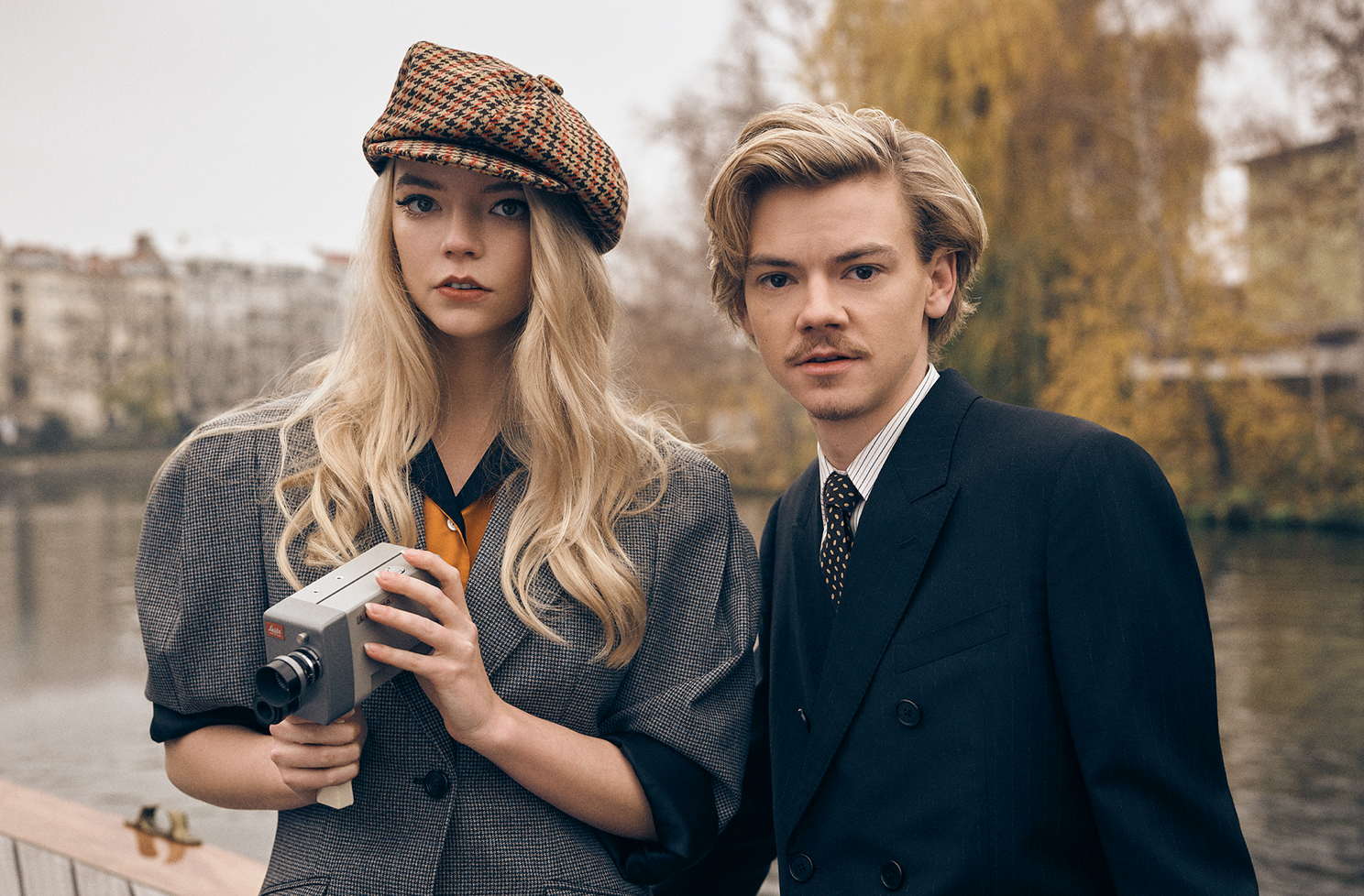
I didn’t think much of The Queen’s Gambit, which seemed like the must-watch for five minutes there. It seemed empty and fetishized America’s post-war boom in the same way that, say, Mad Men did. The only points of interest were really the appearance of Dudley from Harry Potter and the unspoken fact that the lead, Anya Taylor-Joy, and one of her love interests in the show (played by the little demon kid from Love Actually) appear to be exactly the same person.
Period dramas tell you a lot about the obsessions of the culture that makes them. These are the moments when a society dreams it was at its best: Britain’s endless parade of Victoriana; America’s detailed recreations of the 1950s and 1960s; war-time dramas from nearly everywhere. Whenever the productions are ghosts or the stories devoid of real depth, it’s partly because the makers seem to believe that the period is itself a character, which seems to me a stretch.
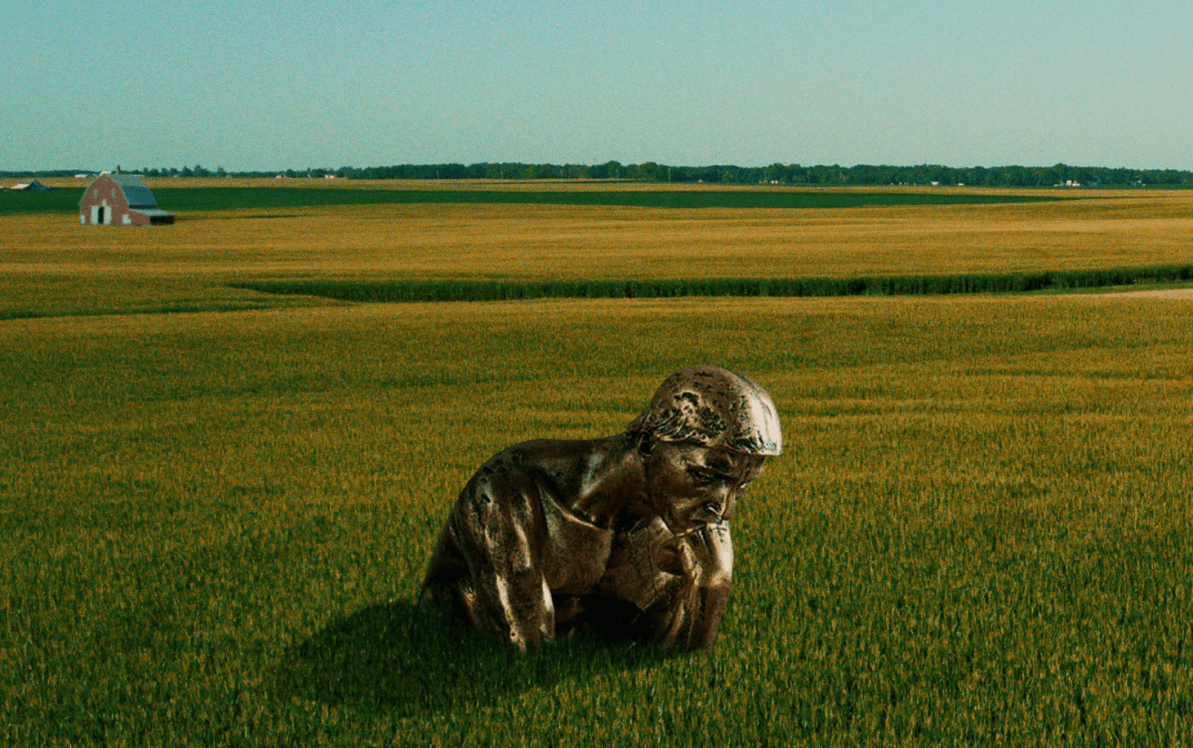
Anyway, the saddest thing about The Queen’s Gambit—and the reason I’m writing about it—isn’t that it’s a failed period piece, or even that it doesn’t capture the spirit of the book (which I haven’t read.) It’s that the life of its author, Walter Tevis, is ultimately much more interesting than the story on the screen.
Tevis was born in San Francisco in 1928, and learned to play chess at the age of 7. When he was 9 he was diagnosed with rheumatic heart and Sydenham’s choreaand was placed in a convalescent home for a year. While he was committed there, his parents abandoned him and moved to Lexington, Kentucky, where they were originally from.
Eventually, Tevis’s family sent him a train ticket to Kentucky, paid for by a family friend. His parents were strict. “I was brought up by a very castrating mother,” Tevis said. “My father was an alcoholic, too, but he wouldn’t admit it, and my mother wouldn’t acknowledge the problem.” Tevis told TheSan Francisco Examiner that life in Kentucky made him feel like he had “come from outer space.” He was beaten up by boys at school; he found little in Lexington to relate to. Harmon, too, lives in Lexington, and she also has trouble relating to the other kids in her school. While Beth sinks deep into an obsession with chess, Tevis found comfort in a different game—pool. “The Lexington poolrooms rescued me,” he said. He would hang around the Phoenix Hotel downtown and watch the gamblers play for big money. There, he befriended a boy who had a pool table at home, and Tevis would play him every single day until they “dropped.” Then they would play chess into the night to relax.
Tevis went on to write three novels that got turned into movies, two of them about pool: The Hustler, The Man Who Fell To Earth, and The Color of Money. In between he spent his time drifting around America, drinking himself stupid, playing pool and chess, and pretending to teach.
Interviewing people is hard. It’s not easy to talk to someone to try and understand who they are and what they’re about. In journalism, you’re trying to get interviewees to say interesting things too—things that hold up on the page, sound good to the reader, that get the subject to provide a kind of forensic self-examination. The result is that the best interviews are elevated to an art form.
But interviewing is also a skill that can be learned, and it’s not limited to speaking to somebody on the record as a journalist. You probably do interviewing a lot, whether it’s on either side of a recruitment process, when you’re dating, when you’re talking to prospective clients, having coffee conversations with friends-of-friends, or hanging out awkwardly with strangers at parties (although nobody goes to parties any more, of course, whether they are populated by strangers or not.)
Turns out his main tenets are pretty straightforward. Be prepared, but not too prepared. Be open. Do lots of interviews.
But here he is giving a particularly salient piece of advice that shows what makes journalistic interviews different from all those other kinds.
One clarifying event was a long interview I did with Lou Reed, who was known for being combative in interviews. I sat down with him and he was insulting and aggressive, and not only did he not really answer my questions but he took issue with the premise of a lot of the questions. I finished it thinking, “That really went badly.” But afterward, when I was putting it together, I could see that while I was bearing the brunt of a lot of his aggression in the interview, the piece actually hadn’t suffered journalistically. It turned out very well. I think it’s a natural human desire to want to feel that a person liked you after you’ve had a conversation with them, but in terms of what an interviewer is supposed to be doing, that’s not always the goal. It’s important to keep that in mind.
You aren’t trying to get the subject to like you: you’re inquiring about their essential character. That’s easy to forget in the moment.
Marchese: When I was first putting together my questions for you, I realized that a lot of them had to do with things like how we can help kids with the ambient stress of parents’ worrying about the pandemic or politics. But maybe it’s wrong for me to assume that a successful children’s-book authorhas unique ideas about kids’ emotions. So let me ask you: Do you think you have special insights about kids? Willems: Probably the most fundamental insight is that even a good childhood is difficult: You’re powerless; the furniture is not made to your size. But when parents come up to me and ask, ‘‘How do you talk to the kid about the pandemic?’’ they’re asking me to be disloyal. They’re actually asking about a form of control. ‘‘Hey, you have this relationship with kids. Help me control them.’’ [Expletive] you! I’m not on your side. I wish there was a better way to say it. The real answer is: Show that you don’t know. Show them that you’re fumbling. Why wouldn’t you? How do you expect your child to fall and then stand up and say ‘‘That’s OK’’ when you won’t even say, ‘‘I don’t know how to discuss the pandemic with you’’? Are children not allowed to be upset? Does that inconvenience you? You want to protect and prepare them. But I’m not saying it’s easy.
They make no sense, deserts. They are an affront to comprehension. I’ve never been anywhere so empty than these alien landscapes, scarred and parched, impossible for me to comprehend. And then you have the preposterous oasis, the cities carved out of rubble, the green valleys hidden between folds in the mountains. They are inventions. Deserts make no sense, unless you are a snake or tumbleweed or a cactus.
We escaped for a change of scenery, played scrabble, and dunked ourselves in the pool. The heat was oppressive, the break perfect. Ten days and we were back home.
The last seven months have been a ride. I’ve thrown myself into work because I am stupid, but also frankly what else do you do when you can barely leave the house? But the last few weeks have been a different kind of effort, more enjoyable, just as daunting.
Three new faces on my team: Eileen Guo joined to start reporting on ethics and social issues, and Lindsay Muscato and Cat Ferguson helping spin up our project to look at pandemic technologies in even more depth.
We popped up a daily election newsletter, The Outcome, from Patrick Howell O’Neill and Abby Ohlheiser. We held a conference!
Oh, and then there was the magazine. That explains my silence in September.
Somewhere along the way I managed to read a lot. Some for pleasure: Angela Chen’s Ace blew my mind and made me think about society’s attitude towards sex in ways I didn’t expect.
And then, for an essay I’m writing, I read a lot about food and hunger. A couple of older classics like Enough by Roger Thurow and Feeding Frenzy by Paul MacMahon. Some fresher morsels like Food or War (Julian Cribb) Bite Back (edited by Sayu Jayaraman+Kathryn De Master), Uncertain Harvest (Ian Mosby et al), Perilous Bounty (Tom Philpott) Food Town, USA (Mark Winne) and not one but two paeans to the potato from Rebecca Earle. This binge puts me a tiny bit ahead in my one-book-a-week challenge for the year, finally.
Britain is so lucky to have the NHS; I find it literally impossible to explain to people here how the system doesn’t have to be this way.
By contrast, the US health care system—if one can call it that—excludes more people, provides thinner coverage, and is far less affordable. It combines socialized medicine practiced by the Department of Veterans Affairs, four-part federal Medicare (A, B, C, D) for the elderly and disabled, state-by-state Medicaid for the poor, health coverage provided by employers, and policies bought privately through an insurance agent or an Affordable Care Act exchange—all of which still leave 10 percent of the population unprotected. Among the biggest problems, says Emanuel, is that Americans are baffled by their health care: uncertain of the benefits they’re entitled to, the providers that will accept their insurance, the amount of their deductibles and copays, and the accuracy of the bills they receive. It is a system, moreover, in which people are regularly switching insurers out of choice or necessity—a process known as churning. “The United States basically has every type of health financing ever invented,” Ezekiel adds. “This is preposterous.”
We’re all spending a lot more time on Zoom these days. Hangouts with friends are a lot like work meetings are a lot like coffee chats are a lot like calls to family.
And we’re all spending a lot more time thinking about—and commenting on—our Zoom backgrounds. Room rating is a thing.
I wonder how the developmental psychologist Jean Piaget would have gotten along with it all.
I mean, I don’t think he’d have cared very much at all. But still.
Silence, as usual, means a heavy workload. Closing an upcoming issue of the magazine, pushing along another large project with lots of moving parts, and helping corral our election coverage has been intense—that’s on top of the day to day business. Next up the election, which I suppose is my third or fourth time around, depending on how you count it. We moved to America shortly before the 2008 Obama victory, which I think skewed my perception of what American presidential races and outcomes were like. The never-ending chaotic evil spin cycle of US politics is enough to leave anyone brain damaged.
I’ve managed to properly read just a couple of books in between, but not much. The Death of Vivek Oji by Akwaeke Emezi I liked well enough, despite feeling a little contrived. And, due to popular demand from the 8-year-old, The Golden Compass by Philip Pullman, which I thought was good for a kid’s book and certainly light years ahead of most of its peers in terms of sheer quality of the written word.
There have been so many exciting new projects from friends that I will make separate posts for them.
Britain’s left is riddled with anti-trans views in a way that continues to disappoint me. This interview with Judith Butler in the New Statesman is a great example of that, and of how to think about representation and poisonous discourse. We see a journalist trying to prod a certain kind of answer out of a thinker, and the thinker responding by rejecting the premises of questioning in an artful and coherent way.
I confess to being perplexed by the fact that you point out the abuse levelled against JK Rowling, but you do not cite the abuse against trans people and their allies that happens online and in person. I disagree with JK Rowling’s view on trans people, but I do not think she should suffer harassment and threats. Let us also remember, though, the threats against trans people in places like Brazil, the harassment of trans people in the streets and on the job in places like Poland and Romania – or indeed right here in the US. So if we are going to object to harassment and threats, as we surely should, we should also make sure we have a large picture of where that is happening, who is most profoundly affected, and whether it is tolerated by those who should be opposing it. It won’t do to say that threats against some people are tolerable but against others are intolerable.