“What is fair… and who decides?”

Leave a comment
Media / Recommendations

Highly recommend Rose Eveleth’s Tested, a six-part podcast about gender verification in sport—and detailing the various ways in which sporting bodies have exerted their desire to categorize and control human bodies.

It’s well told, extremely relevant, historically fascinating, and full of twists and turns. But maybe the most impressive thing is how Rose makes the headlines personal by actually talking to the athletes who are affected by gender rules that treat them like freaks. Women like Christine Mboma, who are subjected to various methods of outside control simply because they do not fit somebody’s pretty arbitrary definition of womanliness.

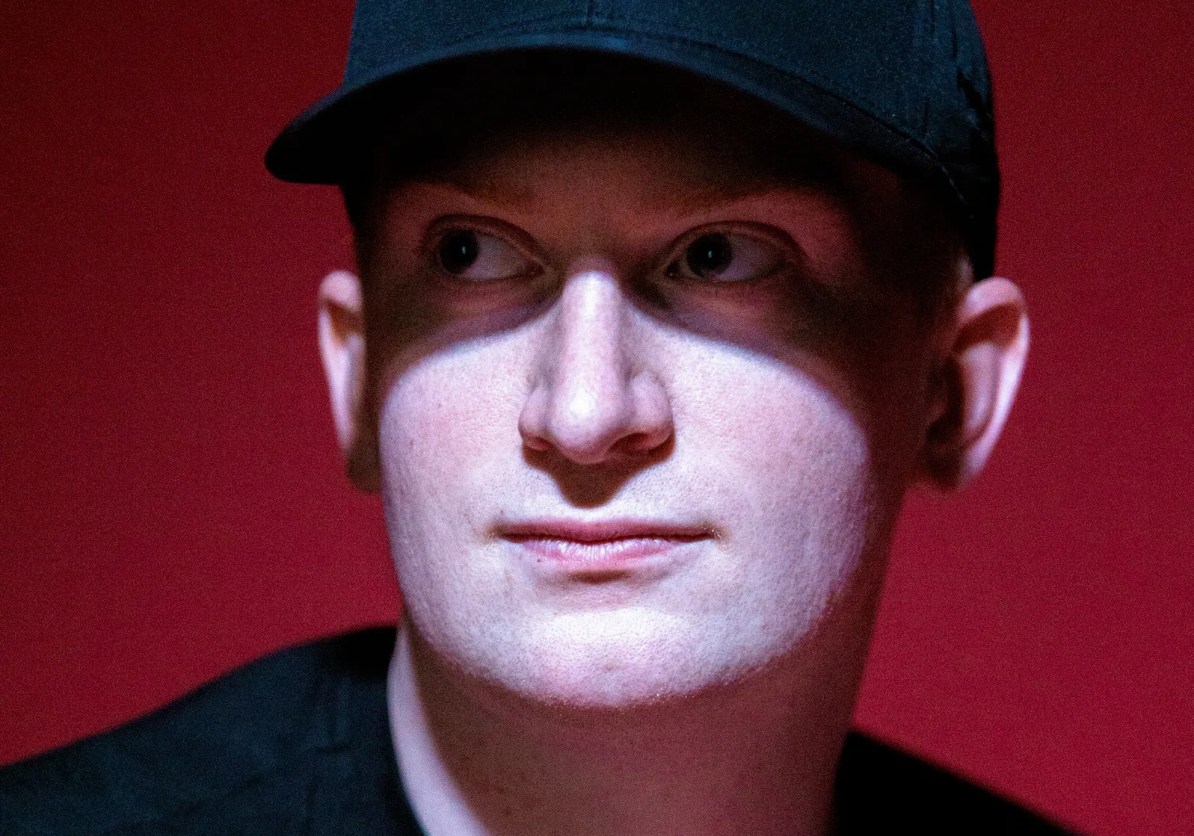
Tested promotional image

Great athletes are often physically unusual: think Michael Phelps’s double-jointed ankles and gigantic wingspan, which were undoubted genetic gifts that played a part in his Olympic success. Or think of basketball star Giannis Antetokounmpo, who is very tall—at At 6’11”, he’s 14 inches taller than the normal American adult male—but has insane ball carrying capacity because his 30cm hands are even bigger, nearly 50% larger than the norm. Meanwhile Leo Messi’s in-built balance and unbelievable kinesthetic sense have aided his footballing genius, and he even took human growth hormone as a child because of growth deficiency. And yet nobody suggests these people should be banned from their sport for their differences, or take drugs to shrink their hands or seize up their joints.

Yet, as Tested carefully explains, that’s what happens to people whose bodies deviate from perceived “femininity” and get treated as if they are doping. During these days, when gender differences are under attack (and the show isn’t even about trans athletes, but it tells us a lot about the way people in authority react to those who do not fit precisely in the binary box) and as the Olympic games, it feels more relevant than it ever was.

I’m two and a half episodes through, and I’m all in.

What I did on my summer holidays

Leave a comment
Uncategorized

We just spent three weeks in the UK and Italy, and it was glorious. Family, mostly, plus a few friends, a little culture, a lot of food, and plenty of pizza and pubs.

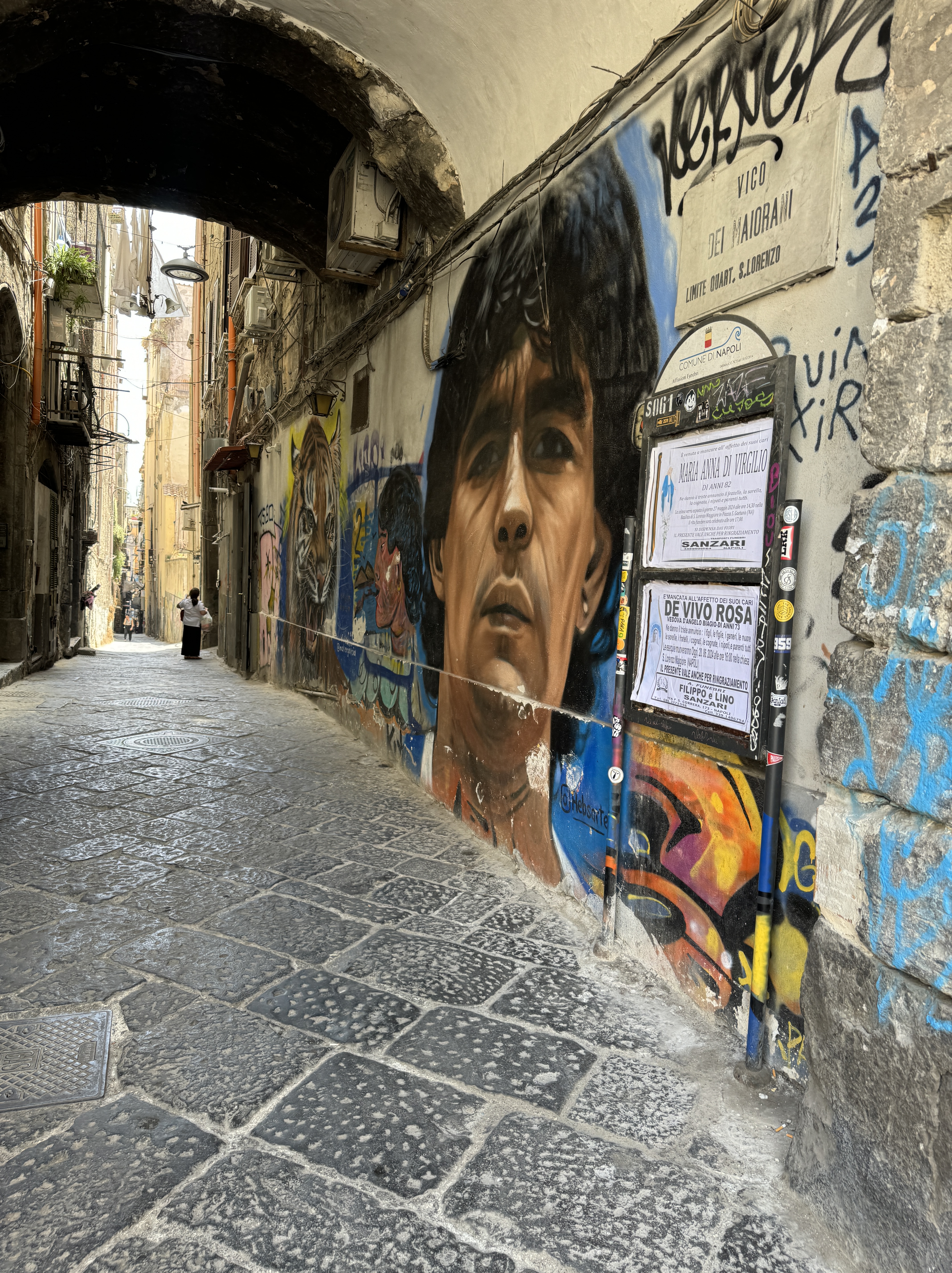
On the quiet side we visited the Isle of Mull and the Suffolk countryside, and on the busy end we hit up Naples, Rome, Florence and London. We explored Pompeii and the Coliseum, we watched Shakespeare, lots and lots of football, and we even bumped into the Tour de France.

Some reflections.

Italian museums have amazing access to antiquities and yet were pretty uninspiring. We took a few guided tours of places of interest and enjoyed them all in various ways, but as spaces, the museums themselves felt entirely uninterested in giving audiences an understanding of anything.

We saw room after room of cases with barely any description or context, or confusing displays that gave no real information. In some cases it was impossible to find the things we were looking for. And nearly everywhere was obsessed with provenance, with telling us about the story of how this item came to be in this museum, which kings or princes had uncovered them, which museum director had overseen the acquisition. Meta history is OK, I suppose, but I want some actual history first.

I did get to see Galileo’s finger, though.

Context was also missing when we went to see a performance of The Taming of the Shrew at the Globe in London. It’s a funny venue with a peculiar audience, and a play that is increasingly hard to put on (each new approach seems to wrap the plot in an extra new layer in order to navigate around its ugliness.) The performances were solid to strong, but the staging more than a little strange. The performance was hard, though, I found the handful of abrupt twists and turns quite distressing. No spoilers, but it lurched forward in a couple of unexpected places.

It was only afterwards that Anna, a connoisseur of the stage, explained that it was a Brechtian performance: i know enough about Brecht that suddenly the aggressive tone and shock value made sense.

Now, I don’t need my art to bash me over the head or deliver its message simply, but I would never have put the pieces together without her help. Nowhere in the program or even the reviews did I get a hint of the epic approach.

(Then again, when the Kate character gave her closing monologue dressed as a rodent, I struggled with serious Roland Rat vibes—it was only after we left that I realized that she was literally dressed as a fucking shrew. So maybe my radar is just not working at the moment.)

Oh, and talking of failed reviews: one other noticing was that the tyranny of online ratings is now utterly complete. Every service, every hotel, every museum, every tour… they all asked us to review the experience online. Asking. Asking again. Pleading. Personally I try to avoid giving ratings myself except in exceptionally good or bad circumstances. That’s probably a good thing, because if I reviewed everything that I was asked to on this trip, it would be a full time job.

A new side project: Curious Reading Club

Leave a comment
books / Work

A few weeks ago I announced a little hobby project that I’ve been working on: Curious Reading Club. I’d love it if you became a member.

The idea is pretty simple: I pick a terrific non-fiction book each month, send a copy to you, then we come together and talk with the author and each other. Membership costs $25 each month—that’s cheaper than the cost of buying the book itself—and you get a few little updates, author interviews, and other reading recommendations from me along the way.

Like I said, it’s a side project. I’m doing this because I thought it would be fun, and I hope that it can break even pretty fast and sustain itself. But if you want to know more about why I’m doing it, you can read more about why I’ve started the club here, or if you just want to get email updates, then you can sign up for the newsletter.

Our first monthly pick is A Map of Future Ruins by Lauren Markham, a really interesting book that was released a couple of months ago about borders, migration, who gets to belong, and how we treat people who don’t qualify. If you sign up by May 15, a copy will shoot straight over to you.

We’re getting close to our magic 25 subscriber number, so if you want to join in then sign up for a monthly membership here.

Sweat equity

Leave a comment
Workbook

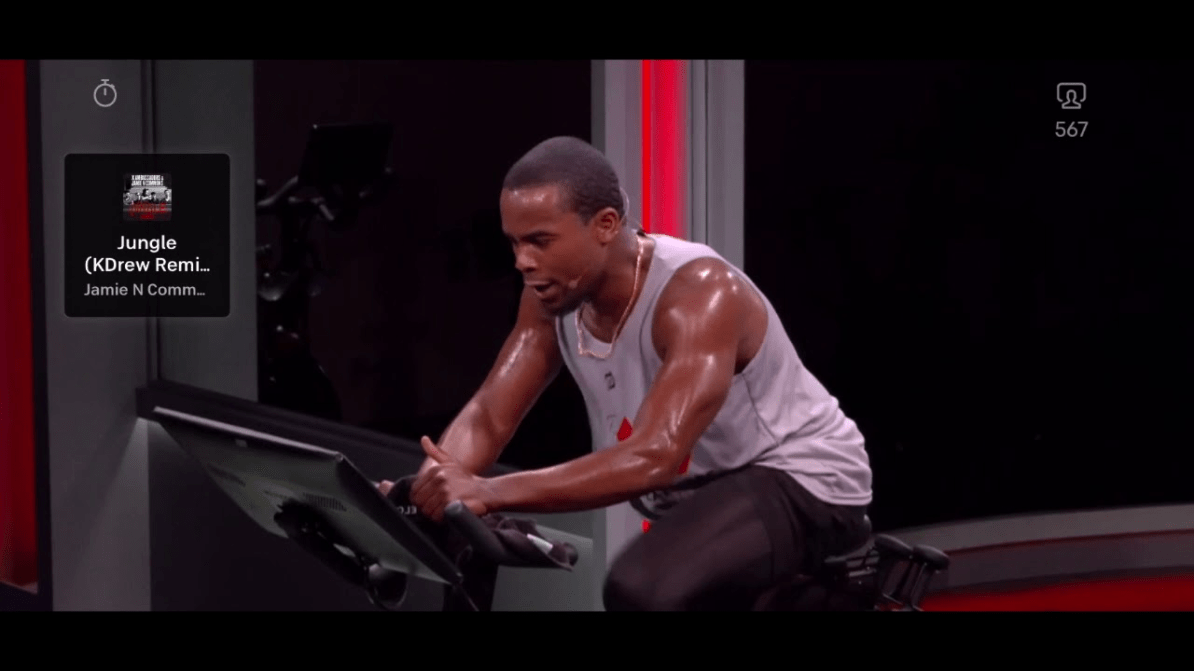
I love my Peloton bike. I know people rag on it, but about five years after I got mine I can say that it’s more than earned its keep. I love real bikes too, but the Peloton has a lot of advantages: it’s always there, weather-resistant, can be adjusted to any member of the family, and requires very little from me to get going. Daily rides absolutely kept me sane during the pandemic, and while I have had busy times and fallow periods, I’ve now done nearly 1,500 rides and still use it most days.

Everyone who uses Peloton has favorite instructors, and ones they avoid. I prefer the trainers who push you along quite hard—and particularly the ones who work hard themselves, the ones who sweat. I don’t want anybody who makes it look too easy, or like they’re not doing the hard yards with you. If I’m sprinting, they better be sprinting too. If I’m cranking up a steep incline, I want to see them going for it as well. So, inevitably, my favorites get sweaty with me. Alex Toussaint will be soaked through by the end of a ride; Hannah Frankson will tell you she’s gassed out and has legs like noodles. In between motivational speeches on this morning’s ride, Christine D’Ercole had puddles of sweat flying off her.

This desire to see the effort is something I value whether it’s in physical work, digital products or anything else. I want to know that somebody worked really hard to make the website that I’m using; I want them to have carefully worked the device that’s in my hands; to have pushed themselves to make the food I’m eating taste great, or to have dedicated themselves to the art that they’re making.

This isn’t just about me needing to feel like I’ve gotten maximum value out of it; it’s not about effort for its own sake. It’s about effort as a way of demonstrating intention and deliberate choices. Sweating the details is a very visible way of being able to tell that somebody gives a shit about what they’re doing. I know from my own work that when you are really familiar with a craft—when you’ve developed your taste and insight—you can see how much work has gone into making the thing.

At Matter, we tried to make the amount of work that went into a story transparent, showing you not just who wrote it but who edited it, who fact-checked it, who copyedited it, and so on. (We toyed with even more exposure: how much money did we spend on it? How many nights did we work on it? How many cups of coffee were consumed? How many phone calls? We decided this was too much, especially for a tiny startup that was learning a lot at every step.)

Experience means that when I’m reading stories, I can see the archeology of the decisions that were made. Why use a particular phrase or construction or approach? Why say this and not that? You can trace the lines through the work, and you can see when it’s sloppy. But even when you’re not an expert you can feel these things. Did the maker work hard to make this easy to use? Have they tried to take your needs into account? Does the thing incorporate all that attention and intention?

We sweat because we work hard to get it right. Because making great things isn’t easy, even if it the end result is simple. Because that care, that love… it matters.

A little work update

Leave a comment
Uncategorized

After two years, I’ve wrapped up my time with the Steve Jobs Archive. I’m extremely proud of the crew and the work we’ve put out there… and it’s also time for something new.

Honestly I don’t know exactly what’s next, so I’m taking a little time off to think about where I want to put my energy. But here are some things I am looking for right now:

—Conversations around consulting projects, particularly if you’re looking for excellent editorial strategy and execution. 
—Discussions about advisory or board roles where I can use my expertise to help you figure out interesting but thorny problems. 

If that sounds interesting, let me know: bobbie at superhyper.net

The virtual and the physical

Leave a comment
weeknotes

Hayes Valley is one of the neighborhoods that’s gentrified most since I first moved to San Francisco. What was a collapsed freeway encircled by shabby Victorians and empty lots is now a bougie strip of bars and glossy retail. Strapping young people fill the plaza. Dives have turned into destinations.

The main street, meanwhile, is stacked with retail outlets for stores you probably heard about first on the internet. Allbirds, Away, Warby Parker. You know the sort of thing. They’re all “tech” in the vaguest sense. Direct-to-consumer, web-based brands with aggressive internet advertising budgets. More than one got going on Kickstarter. Brooklinen (519 Hayes St) calls itself “the internet’s favorite bedsheets.” 

Walking along Hayes Street is a little uncanny. It’s a series of podcast ads come to life. 

Lots of the people in this area work in and around AI, many drawn to San Francisco by the latest promise of a gold rush. There are hacker houses, meetups, startups of all shapes and sizes. Some goons have even tried to relabel the area “Cerebral Valley.” Thankfully it hasn’t caught on.

The spiritual home of this movement is several neighborhoods away, at the offices of OpenAI—although the city is small enough that it only takes a few minutes to get there. The corporate drama that unfolded there recently is not my thing, but for those looking to know more, two recommendations. First is the Atlantic’s reported deep dive, which shows how the split inside the company is both wild and deep; second is this extremely good primer from Max Read. He not only dissects the issues and personalities, but also shows why OpenAI has come to occupy such an oversized position in the press. 

There’s a presumption that there’s a deep philosophy behind the company, and really most of these efforts at artificial intelligence. (Molly White takes a crack at why that might be a problem.) I don’t know if it’s true, but I do know that for all the talk of generations with big ambitions and deep convictions, the same divides seem to be coming up again and again. 

It brought to mind, in roundabout way, another of my mild obsessions. Fast fashion retailer Shein mixes combinatorial scale, automated listings, intent mining, cheap manufacturing and labor exploitation to produce a massive catalog of almost-instant products for anyone. It, not AI, feels like the closest thing to a cyberpunk dystopia that I’ve seen in a while.

Now, like those stores stacked shoulder to shoulder on Hayes St, Shein is going physical. Mia Sato, who has been doing an amazing job digging into the nooks and crannies of online culture at the Verge, went to the Shein store in New York—and found clothes, home goods, and… bizarro land.

Like Shein’s dirt-cheap clothing and accessories, much of the home goods for sale online feel similarly uncanny, like someone generated 10,000 product ideas and slapped a price on them. The bizarre, seemingly random pricing coupled with the truly perplexing product offering give it a Temu-like energy — where tube caps designed to look like a dog is shitting toothpaste ($2.60) are sold next to chicken drumstick-shaped smoking pipes ($4.30).  The pricing is one of the company’s main draws for consumers.

It felt relevant, somehow: this idea of virtual spaces becoming physical locations. Shein is a digital marketplace, it’s now in the real world. OpenAI’s known for its GPT service, but behind the scenes it’s real people. These companies are staffed by real people, and real people do what they have always done, for the same reasons as ever. Money, survival, control—these are just as real today as they ever have been.

Because maybe that’s what it comes down to: the real world. For all the conversations about sustainability and rampant-capitalism-is-destroying-the-planet, Shein and others show that there are big differences between how a culture talks about itself and how it actually behaves. We talk about paying attention, but we all want to pay less. We talk about taking care, but we want it fast. We want change, but we like familiarity. And maybe that means we shouldn’t be surprised when the unreal distinction between the virtual world and the physical ones disappears—whether it’s in the makeup of neighborhoods, in the shops we visit, or in the human dramas we follow.

(Photo used under CC license from SF Planning)

Things I like, November 2023: The niche unbundling edition

Leave a comment
Media / Newsletter / Things my friends have made

The first thing I noticed when opening up Good Tape, a new print magazine for the audio industry put together by my friend Alana Levinson and crew, was how BIG it is. Broadsheet format. Newsprint. This is how we used to read the news! But there’s a lot you can do with those huge spreads, and they have a lot of fun with it. There’s not a lot of information online about its contents, so no spoilers. I’m making my way through it slowly, and enjoying it so far—feels like an enjoyable party for podcast insiders. 

Another new venture, the Sick Times is gearing up to provide independent reporting into long Covid. Started by Betsy Ladyzhets, who has really done superb, data-informed pandemic coverage across the board (I was lucky enough that she wrote a couple of pieces for the Covid desk at Technology Review) and Miles Griffis, they are building slowly and openly—and I like that! I’m enjoying this post-Defector moment when journalists are taking it upon themselves to build small and hopefully sustainable ventures: from 404 to Platformer to Hell Gate to The Appeal. A decade ago we talked about subcompact publishing. Has anyone come up with a good name for this movement? A trade press of sorts.* 

Meanwhile The Guardian is releasing a printed Long Reads magazine. I’m eager to see it. There’s a write-up focused on design at It’s Nice That. Some behind the scenes audio. And a reflection by Josh Benton at Nieman Lab discussing how this returns to previous ideas earlier in the longread timeline.**

There’s a thread between all these ideas about formats and niches and bundling and unbundling—supplying audiences with specific things in specific ways. It’s been obvious to me for a long time that while publishers gain traction by bundling their products together, they can gain more loyalty (and maybe profit?) by then unbundling that product for different audiences—essentially separating a generalist product into its constituent parts: whether that’s supporting different consumption speeds, like fast and slow; focusing on different specialisms and interests; or releasing material in different formats that people like to consume, from web to audio to print. Think the New York Times Games and Recipes apps, the Guardian Weekly news digest magazine, all manner of podcasts and so on.

* Of course, at some point if these are not really sustainable, there’s a likelihood somebody comes and tries to roll them all up. It’s what the New York Times is doing with the Athletic, and at a platform level, it’s the whole Substack model. But the pendulum swings back and forth, and I think we’re on an upswing… the consolidation part generally ends up leaving things worse than better: I was reminded when Jezebel became the latest casualty. Let’s work out how a thousand flowers might bloom instead of seeing too much ~synergy~.

** Note: the Long Good Read experiment (2013) predates the Guardian’s Long Read franchise (2014). But of course, outside of that, the idea of bundling and then disaggregating isn’t new at all. I joined the Guardian in the “G3” era —weekly specialist print products that were bundled up for different industries; media, social care, education, science + technology, mainly paid for by job advertising. They were folded into the main newsprint edition in 2011. But I think smart folks are always revisiting ideas and finding ways to make them work.

Do something

Leave a comment
Newsletter

Humans do. It’s how we operate; a fundamental part of what makes us. We shape the world around us. We observe. We try to be interesting. We act.

Every action is a protest against what was there before. Every creation is a moment of optimism. Doing is how we are built.

Sometimes we do with our bodies. Remember covid lockdowns? Remember when a new and potentially deadly disease stalked the planet, when nobody was even sure how it spread, but all they knew was that it was spreading fast and killing people? Remember hospitals collapsing under the weight of infections? Remember the hammer and the dance? There were lockdowns and shutdowns and plenty of meltdowns. Joe Nocera and Bethany McLean have a new book, The Big Fail, which argues (as summarized in this New York piece) that lockdowns were an experiment that failed. I don’t know enough about the book’s nuance to make a judgment, but I do know that a million people dying of a novel virus is exactly the kind of moment that drives people to do something. 

Sometimes we do with our money. I read a long piece about how impact investing may have perverse outcomes. Money with an ethical intention, it suggests, may push investment into the wrong places and make it harder for the market. I don’t know enough about the underlying data to make an informed decision on its argument, but I do see an emptiness at the core. Do I want to support the status quo? Or do I want to support possibility?

Sometimes we do with our voices. People in the streets. People in TV and radio broadcasts, on paper. People in web pages and posts. People speaking to each other. People shouting. These are all humans, trying to do something. We can’t escape doing: even when we abstain, it’s an action in and of itself.

In the face of everything out there, it’s what we are. 

What do you do? Save a life. Make a choice. Change a course. 

You do nothing. 

You do something.

There’s a lot of people trying to do something right now.

“You need to enjoy being there”

Leave a comment
Link

Great series on Threads from a small publisher on the destruction of Twitter and what it means for them.

  • To engage properly in these spaces, you need to enjoy being there.
  • Engagement is tumbling (so perhaps fewer people are enjoying being there.)
  • No other space has emerged as a replacement.
  • There is an upside, and these spaces can be hugely valuable.

I am not currently using Twitter or any diaspora service, although you may see me parked on them as either @bobbie or @bobbiejohnson. I don’t trust the ones set up by people who have gotten it wrong before (see Threads, Bluesky) while federated services like Mastodon just aren’t there yet and I don’t want to invest time until it’s clear whether any of them will create a space that is fun for me to take part in again. So instead, I’ve been favoring LinkedIn for work-related stuff and the blog as a repository for my thoughts.

Confessions

Leave a comment
Link

Startup world has plenty of hustle guys: people who admit that Silicon Valley’s appeal to them is essentially get rich quick. It also has a lot of true believers—people who are deeply attached to a vision or a feeling or driven by sheer possibility—even if only a handful actually turn out to be able to deliver what they believe. What it also has in abundance is people present as the second group but are, in fact, part of the first. The difference? It’s not something that many will readily admit.

That’s one reason I found “confessions of a middle class founder” so compelling:

Every founder tells themselves a story about why they’re heading to the gold rush, but the executive coach I would eventually hire says there are really only two. Do you want to be rich, generating wealth in service of some further end? Or do you want to be king, with money a mere byproduct of trying to make the world the way you feel it should be?

Worth reading the whole thing.