The news recently came through that the Guardian was unhooking itself from the drip drip drip of the Twitterverse. It was coming for a long time, they said, a decision that “the benefits of being on X are now outweighed by the negatives.” It made headlines, unsurprisingly—and seems to be a vanguard in a fresh exodus away from Twitter after the dispiriting election results in early November.
The news meant landed a little different for me, though: the start of a crashing wave of recollections—the kind of sudden, sharp memory zoom that leaves you a little disoriented.
Why was I thrown into this madeleine? Because I set up the Guardian’s first Twitter feeds approximately one billion years, two continents and many grey hairs ago. And I never thought shutting them down would be a news story in its own right.
They were simple things back in 2007, direct, unadorned and largely unsupported: a conveyer belt of headlines piped straight from the news feeds, built from unvarnished headlines and sometimes little comments. It took me just a few hours to set up the accounts and get them running, with some janky little logos and a very basic structure. There was @guardiannews, @guardiantech and a bunch more I think, and they gained followers rapidly: hundreds, thousands, millions in the end (although I’d handed over the keys long before.)
Like many things at the Guardian back then, the Technology desk was often the first place to try out new ideas. We ran with a nod from management, but felt like we were rogue operators. I was, perhaps, a sniffer dog looking for new platforms and ideas. Or—and this is more likely it seems now, with the benefit of perspective—a canary.
But it was fun.
The internet really was a wilder place then, less conforming, less sterile, more open and less abrasive. It felt beautifully unfinished. We didn’t know what was going to happen, and that was part of the attraction.
I’m currently reading Jeff Jarvis’s book The Web We Weave, which has some great examples of where we went wrong online, alongside a tub-thumping of what we can still get right. Its mixture of sadness and hope reminded me of an essay I helped edit back in 2015 maybe one of my favorite pieces I’ve ever worked on: The Web We Have To Save.
Hossein Derakhshan, an Iranian-Canadian blogger better known by the nickname Hoder, had been in jail in Tehran for six years for things he’d written online. We’d met once I think before his arrest, and after he was released a friend put us back in touch. He had a raw piece of writing he’d carved out of his head when he got out and saw how screwed up the internet—this place that he loved so much, that he’d been incarcerated for—was.
The piece took a lot of work from both of us to bring around, but it stands up a decade later. (It’s ironic that the piece is behind a paywall now, perhaps, but here’s a readable version.)
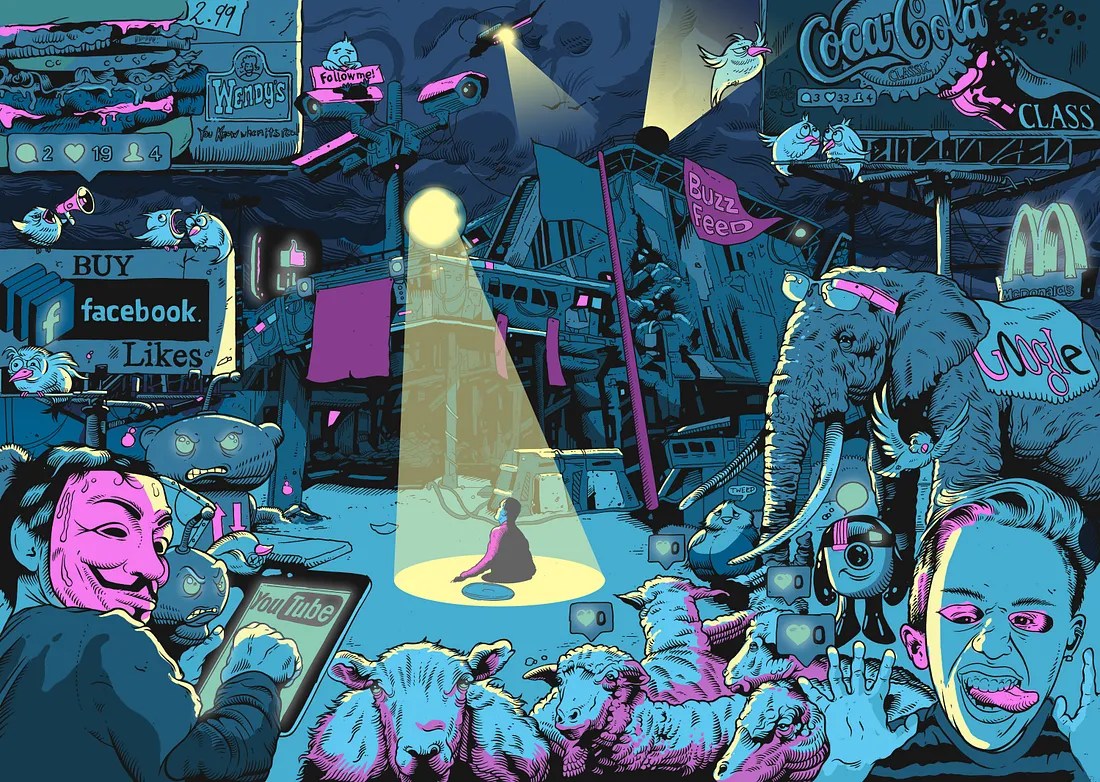
"The Stream means you don’t need to open so many websites any more. You don’t need numerous tabs. You don’t even need a web browser. You open Twitter or Facebook on your smartphone and dive deep in. The mountain has come to you. Algorithms have picked everything for you. According to what you or your friends have read or seen before, they predict what you might like to see. It feels great not to waste time in finding interesting things on so many websites."He was not wrong.
⌘
I still think about that story a lot, about what Hossein saw—what he knew—before the stream and after.
It’s all changed now, of course, changed even more than it had back then. Twitter long ago lost its shine for me, my posting slowed as the tone shifted; I stopped completely a few years ago when it was clear that things had taken a dramatic nosedive. And, as I said almost exactly year ago, I don’t intend to replace what I found on Twitter with something else.
Threads just seems like swapping one soul-sucking overlord for another. I remain skeptical of Bluesky for similar reasons, a Twitter alternative set up by people who were looking for a do-over because they screwed Twitter up in the first place (even if I understand that Jack Dorsey has perhaps nothing to do with it now.) Mastodon just feels like an ill-fitting pair of trousers, and LinkedIn is well, LinkedIn.
The Stream has me in its grasp, just like everybody else, but at least I don’t need to feed it any more. All I know is that we started a thing in 2007, and it lasted 17 years before somebody yanked its plug out of the wall. That’s pretty good going for a rainy afternoon’s work, I think.
 Start here