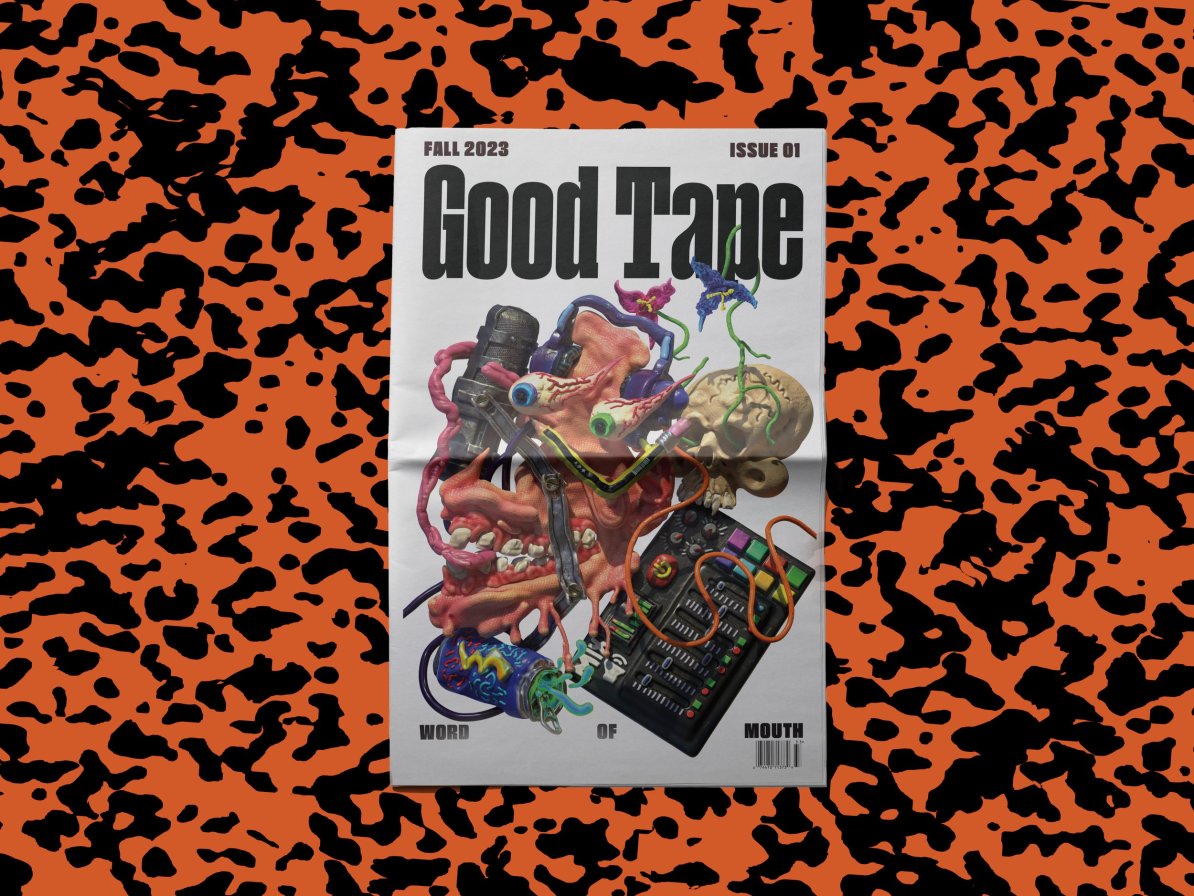
The first thing I noticed when opening up Good Tape, a new print magazine for the audio industry put together by my friend Alana Levinson and crew, was how BIG it is. Broadsheet format. Newsprint. This is how we used to read the news! But there’s a lot you can do with those huge spreads, and they have a lot of fun with it. There’s not a lot of information online about its contents, so no spoilers. I’m making my way through it slowly, and enjoying it so far—feels like an enjoyable party for podcast insiders.
Another new venture, the Sick Times is gearing up to provide independent reporting into long Covid. Started by Betsy Ladyzhets, who has really done superb, data-informed pandemic coverage across the board (I was lucky enough that she wrote a couple of pieces for the Covid desk at Technology Review) and Miles Griffis, they are building slowly and openly—and I like that! I’m enjoying this post-Defector moment when journalists are taking it upon themselves to build small and hopefully sustainable ventures: from 404 to Platformer to Hell Gate to The Appeal. A decade ago we talked about subcompact publishing. Has anyone come up with a good name for this movement? A trade press of sorts.*
Meanwhile The Guardian is releasing a printed Long Reads magazine. I’m eager to see it. There’s a write-up focused on design at It’s Nice That. Some behind the scenes audio. And a reflection by Josh Benton at Nieman Lab discussing how this returns to previous ideas earlier in the longread timeline.**
There’s a thread between all these ideas about formats and niches and bundling and unbundling—supplying audiences with specific things in specific ways. It’s been obvious to me for a long time that while publishers gain traction by bundling their products together, they can gain more loyalty (and maybe profit?) by then unbundling that product for different audiences—essentially separating a generalist product into its constituent parts: whether that’s supporting different consumption speeds, like fast and slow; focusing on different specialisms and interests; or releasing material in different formats that people like to consume, from web to audio to print. Think the New York Times Games and Recipes apps, the Guardian Weekly news digest magazine, all manner of podcasts and so on.
* Of course, at some point if these are not really sustainable, there’s a likelihood somebody comes and tries to roll them all up. It’s what the New York Times is doing with the Athletic, and at a platform level, it’s the whole Substack model. But the pendulum swings back and forth, and I think we’re on an upswing… the consolidation part generally ends up leaving things worse than better: I was reminded when Jezebel became the latest casualty. Let’s work out how a thousand flowers might bloom instead of seeing too much ~synergy~.
** Note: the Long Good Read experiment (2013) predates the Guardian’s Long Read franchise (2014). But of course, outside of that, the idea of bundling and then disaggregating isn’t new at all. I joined the Guardian in the “G3” era —weekly specialist print products that were bundled up for different industries; media, social care, education, science + technology, mainly paid for by job advertising. They were folded into the main newsprint edition in 2011. But I think smart folks are always revisiting ideas and finding ways to make them work.
 Start here